




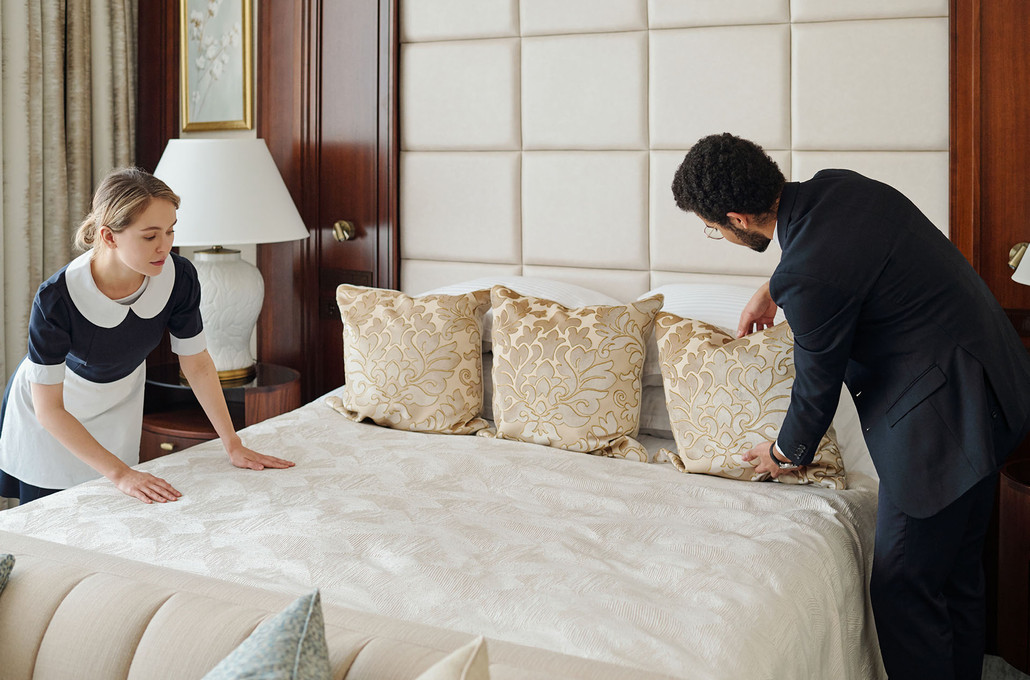
How to Train Housekeeping Teams for Better Guest Experiences
Posted by Amenie on Jan 27, 2026
Housekeeping shapes the guest experience more than almost any other department. With cleanliness consistently ranking as the most important factor travelers consider when choosing where to stay, your housekeeping team's skills, knowledge, and morale directly impact your property's reputation and bottom line.
Yet the hospitality industry faces a persistent challenge: turnover rates among housekeeping staff remain the highest in the sector, with research indicating that over half of room attendants leave their positions within the first 90 days of hire. This revolving door creates a constant need for effective onboarding and training systems that can get new team members up to speed quickly while maintaining the service standards your guests expect.
The good news? Properties that invest in structured training programs report significantly lower turnover, higher guest satisfaction scores, and more efficient operations. This guide explores proven strategies for building a housekeeping training program that creates skilled, confident team members and delivers the spotless rooms guests remember.

Why Housekeeping Training Matters More Than Ever
The connection between housekeeping performance and business success has never been clearer. When housekeeping standards slip, everything else becomes secondary—no amount of beautiful décor or friendly service can overcome a guest's reaction to finding stained towels or dirty bathrooms.
Training does more than teach cleaning techniques. It builds the confidence and competence that reduce turnover, a critical concern when replacing a single employee can cost more than $5,000 in recruiting, hiring, training, and lost productivity. Properties that prioritize training also see improvements in staff morale and engagement, creating a positive cycle where experienced team members stay longer and mentor newer colleagues.
For limited-service and budget properties facing tight margins, effective training becomes even more essential. Without the resources for extensive supervision or premium amenities, these properties rely heavily on consistent cleanliness to compete. A well-trained housekeeping team can deliver quality comparable to higher-tier properties at a fraction of the cost.
Building Effective Standard Operating Procedures
Standard operating procedures form the foundation of any successful housekeeping training program. SOPs provide new hires with a structured framework for learning necessary tasks and procedures, allowing them to quickly become familiar with property expectations and standards.
Creating SOPs That Work
The most effective SOPs share several characteristics. They break complex tasks into sequential steps that anyone can follow, regardless of prior experience. They include visual references—photos or diagrams showing correct outcomes—because not all team members learn best from written instructions alone. And they specify both what to do and what to avoid, preventing common mistakes before they happen.
When developing your SOPs, consider the specific challenges of your property type. A boutique hotel may require detailed protocols for handling antique furniture or specialty linens, while a roadside motel might emphasize speed and efficiency with standard room configurations. Your procedures should reflect your actual operations, not an idealized version that doesn't match reality.
SOPs should also evolve. As technology advances, new cleaning products become available, and industry regulations change, procedures need revision to incorporate these developments. Schedule regular reviews of your SOPs—quarterly is often sufficient—to keep them current and relevant. This ongoing refinement also presents opportunities to involve experienced staff in identifying improvements, reinforcing their expertise, and investing in team success.
How to Onboard New Housekeepers Quickly and Effectively
The first few weeks in a new position shape whether an employee stays or joins the turnover statistics. A thoughtful onboarding process reduces anxiety, builds competence, and demonstrates that your property values its people.
Start With In-Person Foundation Training
The initial housekeeping training sessions should be held in person whenever possible. Face-to-face interaction allows new hires to ask questions, receive immediate feedback, and begin building relationships with supervisors and colleagues. This personal connection matters—employees who feel welcomed and supported during onboarding report higher job satisfaction and longer tenure.
Foundation training should cover several essential areas:
Your property's cleaning procedures and quality standards provide the technical knowledge new team members need. Walk through each room type, demonstrating expected outcomes and explaining the reasoning behind specific practices. When housekeepers understand why certain standards exist—guest safety, hygiene requirements, brand expectations—they're more likely to maintain those standards consistently.
Safety protocols deserve significant attention during onboarding. Housekeepers work with cleaning chemicals, heavy equipment, and situations that require physical care. Training on proper use of personal protective equipment, chemical handling, and ergonomic techniques protects both employees and your property from preventable injuries.
Guest interaction guidelines prepare staff for the moments when their work intersects with guests directly. Should housekeepers initiate conversations, or respond only when approached? How should they handle requests for extra towels or toiletries? What activities are encouraged or discouraged? Clear expectations prevent uncomfortable situations and create consistent guest experiences.
Implement Shadowing and Mentorship
Following initial orientation, new housekeepers benefit enormously from shadowing experienced team members. This observation period lets them see procedures applied in real conditions, with all the variations and judgment calls that written instructions can't fully capture.
The best mentors aren't necessarily the fastest cleaners—they're patient teachers who can articulate their methods and answer questions without frustration. Consider this when assigning mentorship responsibilities, and recognize mentors for their contribution to team development.
Shadowing should gradually transition to supervised practice, where new employees clean rooms under observation. This shift allows trainers to identify gaps in understanding and correct techniques before bad habits form. Provide constructive feedback immediately, while the context remains fresh, and celebrate improvements to build confidence.
Leverage Technology for Ongoing Support
Once foundational training concludes, technology can reinforce learning and provide on-demand reference materials. Short video tutorials—even simple recordings made on smartphones—allow staff to review techniques whenever questions arise. Digital checklists on mobile devices guide room cleaning step by step, reducing the chance of missed tasks.
Consider creating a digital library of training resources that staff can access during shifts. Quick-reference guides for handling specific situations (heavy stains, equipment malfunctions, unusual guest requests) save time and reduce the need for constant supervisor involvement.

Training for Consistency Across Every Room and Shift
Consistency presents one of housekeeping's greatest challenges. Different team members working different shifts must deliver identical quality, regardless of occupancy pressure, staffing levels, or personal fatigue.
Develop Comprehensive Checklists
Detailed checklists serve as both training tools and quality control mechanisms. A well-designed checklist walks through every task in logical sequence, from stripping beds and removing used hotel towels to final placement of bath and body amenities.
Effective checklists go beyond simple task lists. They include quality indicators—not just "clean mirrors" but "mirrors free of spots, streaks, and fingerprints when viewed from multiple angles." This specificity removes ambiguity and creates shared understanding of what "clean" actually means at your property.
Digital checklist systems offer additional benefits, enabling photo documentation of completed work, real-time issue reporting, and automatic task assignment to maintenance when problems arise. Properties using mobile inspection applications typically reduce inspection time by 30–40% while improving documentation quality.
Establish Clear Quality Standards
Abstract standards like "spotless" or "pristine" mean different things to different people. Effective training defines quality in concrete, observable terms that anyone can verify.
Create photo standards showing correct outcomes for each room element: properly made beds with specific tuck patterns, bathroom amenities arranged in designated positions, linens folded consistently. These visual references eliminate guesswork and provide objective criteria for self-inspection and supervisor review.
Consider developing a scoring system for room inspections that weights different elements by importance. High-touch surfaces and bathroom cleanliness might carry more weight than closet organization, reflecting guest priorities and complaint patterns. Share scoring criteria with housekeeping staff so they understand how their work will be evaluated.
Train for Time Management Without Sacrificing Quality
Housekeepers face constant pressure to complete more rooms in less time. Training should address this reality directly, teaching efficient workflows that maintain quality rather than hoping staff will figure out shortcuts on their own.
Efficient room cleaning follows logical progressions that minimize wasted motion. Starting from one point and working systematically around the room prevents backtracking. Gathering all necessary supplies before beginning—from a well-stocked housekeeping cart—eliminates trips back to supply closets. Cleaning from top surfaces downward prevents dust from falling onto already-cleaned areas.
Track cleaning times by room type and publish benchmarks, but be careful not to create incentives that sacrifice quality for speed. The goal is efficiency—achieving the same outcomes with less wasted effort—not rushing through tasks.
Training Housekeepers for Guest Interaction
Housekeepers are often the most visible hotel employees during a guest's stay. Their interactions, however brief, contribute to overall satisfaction and can defuse potential complaints before they escalate.
Teach Service-Minded Communication
Every staff interaction should reflect your property's service standards. Train housekeepers on appropriate greetings, professional demeanor, and polite responses to guest requests. Role-playing exercises help staff practice handling various scenarios, from simple questions about property amenities to complaints about room conditions.
Emphasize the importance of body language and tone. A warm smile and attentive posture communicate care even when language barriers exist. Many housekeeping teams include multilingual members—this diversity becomes an asset when properly supported with consistent service standards.
Empower Problem Resolution
Housekeepers often encounter issues first—maintenance problems, unusual conditions, evidence of policy violations. Training should clarify reporting procedures and, where appropriate, authorize immediate action.
Consider which decisions housekeepers can make independently. Providing extra towels, makeup washcloths, or toiletries typically requires no approval. More significant requests might need supervisor confirmation. Clear guidelines prevent both excessive delays and unauthorized actions.
When housekeepers identify problems they cannot resolve, they need efficient channels for escalation. Mobile communication tools enable real-time reporting to supervisors and maintenance, preventing issues from lingering until a guest complains.
Specialized Training for Product and Equipment Excellence
Your housekeeping team works with numerous products and equipment daily. Proper training on these tools improves both results and safety.
Cleaning Products and Chemicals
Different surfaces require different cleaning approaches. Training should cover which products work best on various materials—glass, wood, tile, carpet, stainless steel—and which combinations to avoid. Chemical safety training, including proper dilution ratios and necessary protective equipment, protects staff health and prevents surface damage.
As properties increasingly adopt eco-friendly cleaning practices, housekeepers need training on any differences in technique or expectations. Some green products work differently than conventional alternatives, and staff accustomed to traditional chemicals may need guidance during transitions.
Linen and Amenity Standards
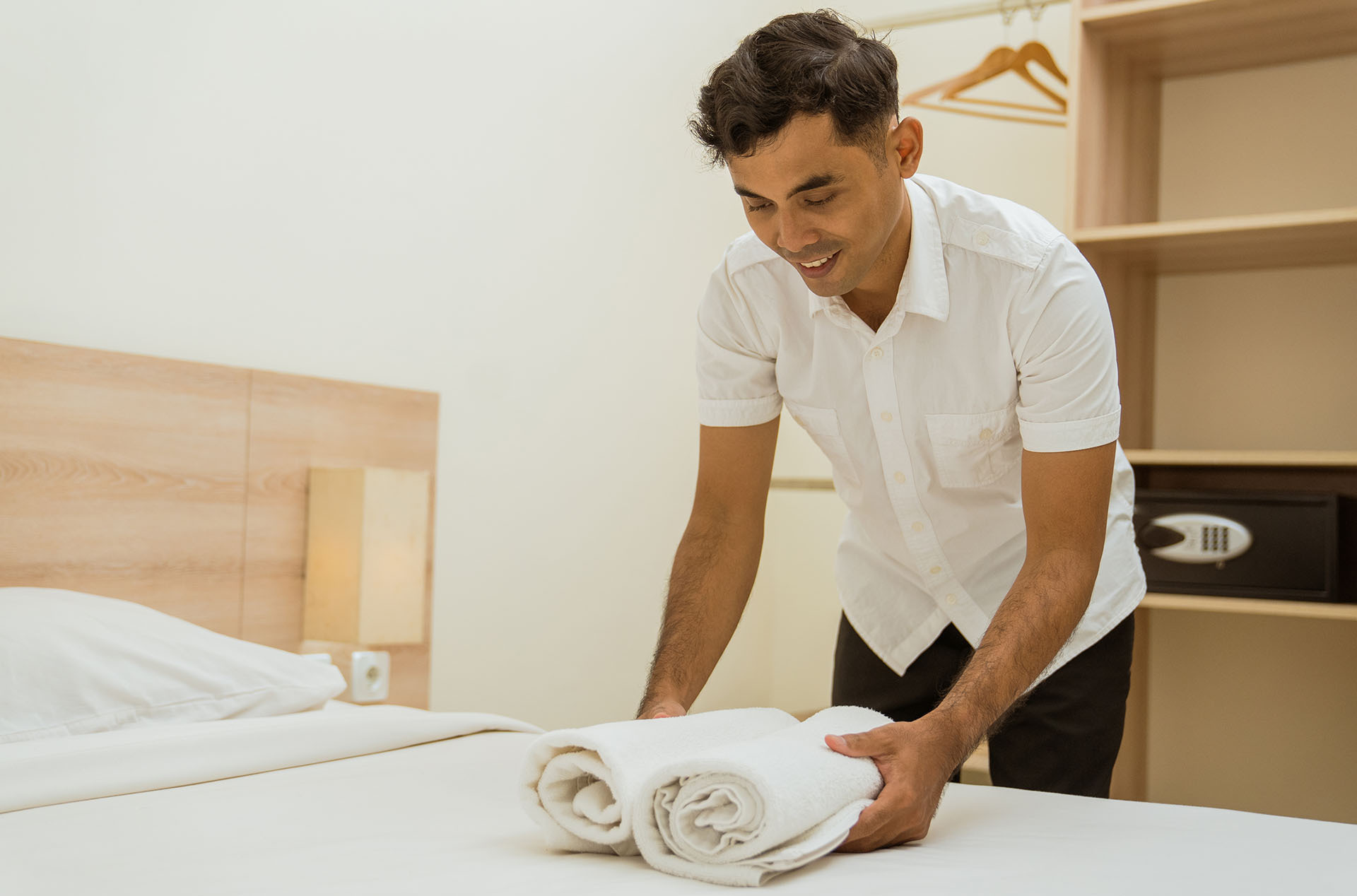
The quality of your linens and amenities shapes guest perception of your property. Train housekeepers to inspect hotel blankets, sheets, and towels for wear, stains, or damage, removing compromised items from circulation before guests encounter them.
Amenity placement should follow consistent standards. Whether your property offers standard toiletries or premium skincare brands, presentation matters. Train staff on correct positioning and quantities, ensuring every guest room looks thoughtfully prepared.
Equipment Operation and Care
Modern housekeeping relies on various equipment, from vacuum cleaners to floor machines. Comprehensive training covers proper operation, routine maintenance, and recognition of problems requiring professional service. Well-maintained equipment lasts longer and performs better, while equipment failures during shifts create frustrating delays.
Building a Culture of Continuous Improvement
Training shouldn't end after onboarding. The most successful housekeeping programs create ongoing learning opportunities that keep skills sharp and engagement high.
Regular Refresher Training
Schedule periodic training sessions that reinforce key standards and introduce improvements. These sessions prevent gradual drift from established procedures and provide forums for sharing best practices discovered by experienced staff.
Refresher training also addresses emerging challenges. New stain types, updated safety regulations, or changes in guest expectations all warrant attention. Brief, focused sessions maintain relevance without overwhelming busy schedules.
Performance Feedback and Recognition
Regular feedback helps housekeepers understand how they're performing and where to focus improvement efforts. Share inspection results, guest feedback, and productivity metrics in constructive ways that guide development rather than simply criticizing shortcomings.
Recognition programs acknowledging excellent work boost morale and reinforce desired behaviors. Whether through formal awards, public acknowledgment in team meetings, or simple expressions of appreciation, recognizing good performance encourages its continuation.
Career Development Opportunities
Housekeeping shouldn't feel like a dead-end position. Training for supervisory roles, cross-training in other departments, or skill development in specialized areas (deep cleaning, turndown service, sustainable practices) shows employees that growth is possible.
Properties that invest in development retain experienced staff longer, reducing the constant churn that undermines quality and increases costs. Even modest investments in career growth demonstrate that you value your team as more than interchangeable labor.
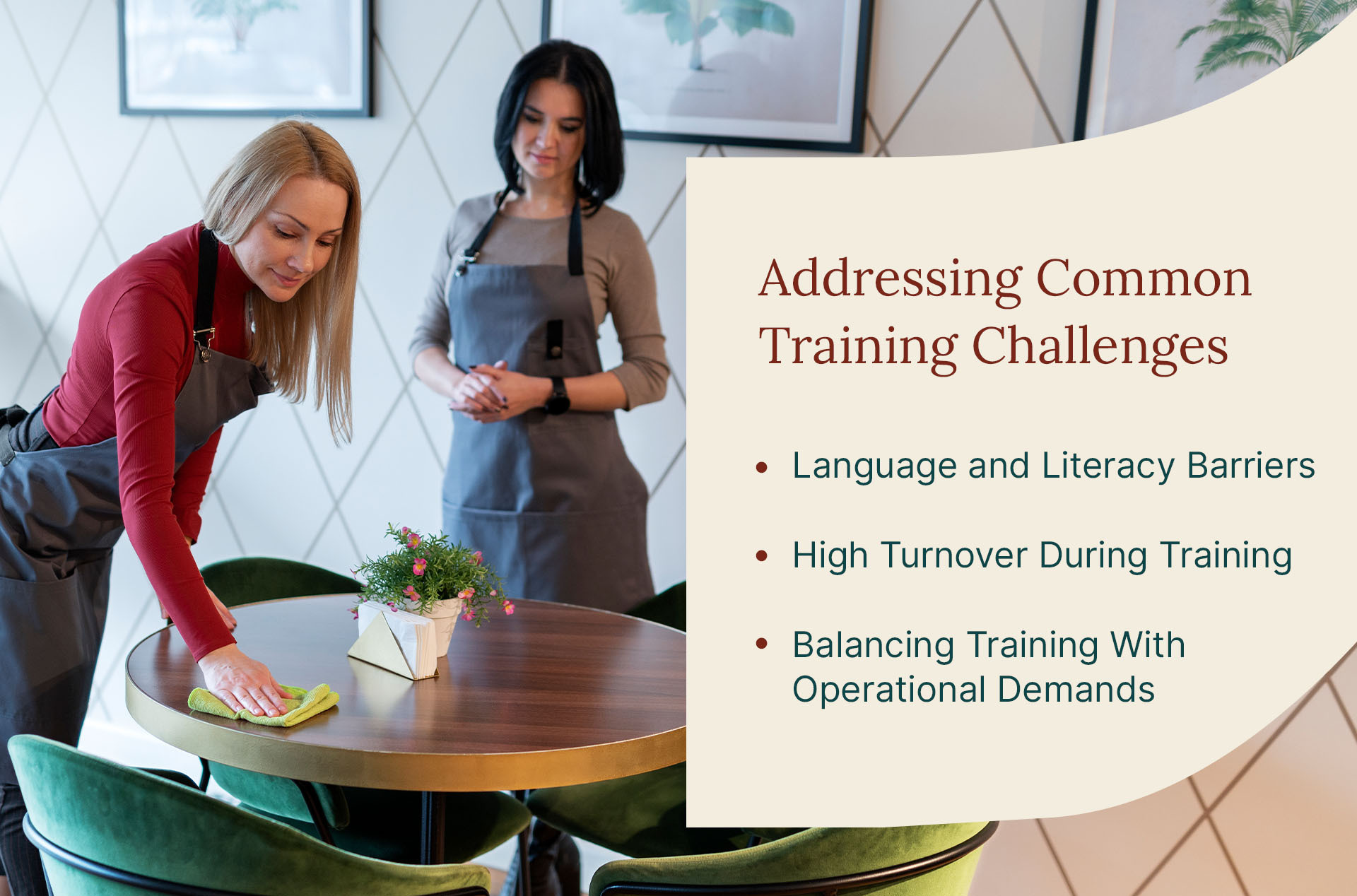
Addressing Common Training Challenges
Every property faces obstacles in developing effective training programs. Anticipating these challenges helps you prepare solutions.
Language and Literacy Barriers
Housekeeping teams often include members for whom English is a second language or who have limited formal education. Training materials should accommodate diverse learning needs through visual instructions, demonstrations, and materials in relevant languages where possible.
Pair new employees who share language backgrounds with bilingual colleagues who can help bridge communication gaps during initial training. Consider whether key documents—safety protocols, emergency procedures, core standards—should be translated.
High Turnover During Training
Some new hires leave before completing training, wasting resources invested in their development. Front-load the most essential information, ensuring that even brief employment contributes some productive work. Identify early warning signs of disengagement and address concerns before resignation.
Examine your training process for factors that drive early departures. Unrealistic expectations during hiring, inadequate support during the learning curve, or schedule conflicts all contribute to turnover. Addressing these factors improves completion rates.
Balancing Training With Operational Demands
Properties operate seven days a week, and training competes with immediate room cleaning needs. Build training into regular operations rather than treating it as separate from productive work.
Overlapping shifts can create windows for training activities. Slow periods—mid-week low seasons, early morning hours—offer opportunities for development sessions without impacting guest service. Cross-training allows flexible coverage when staff attend formal training.
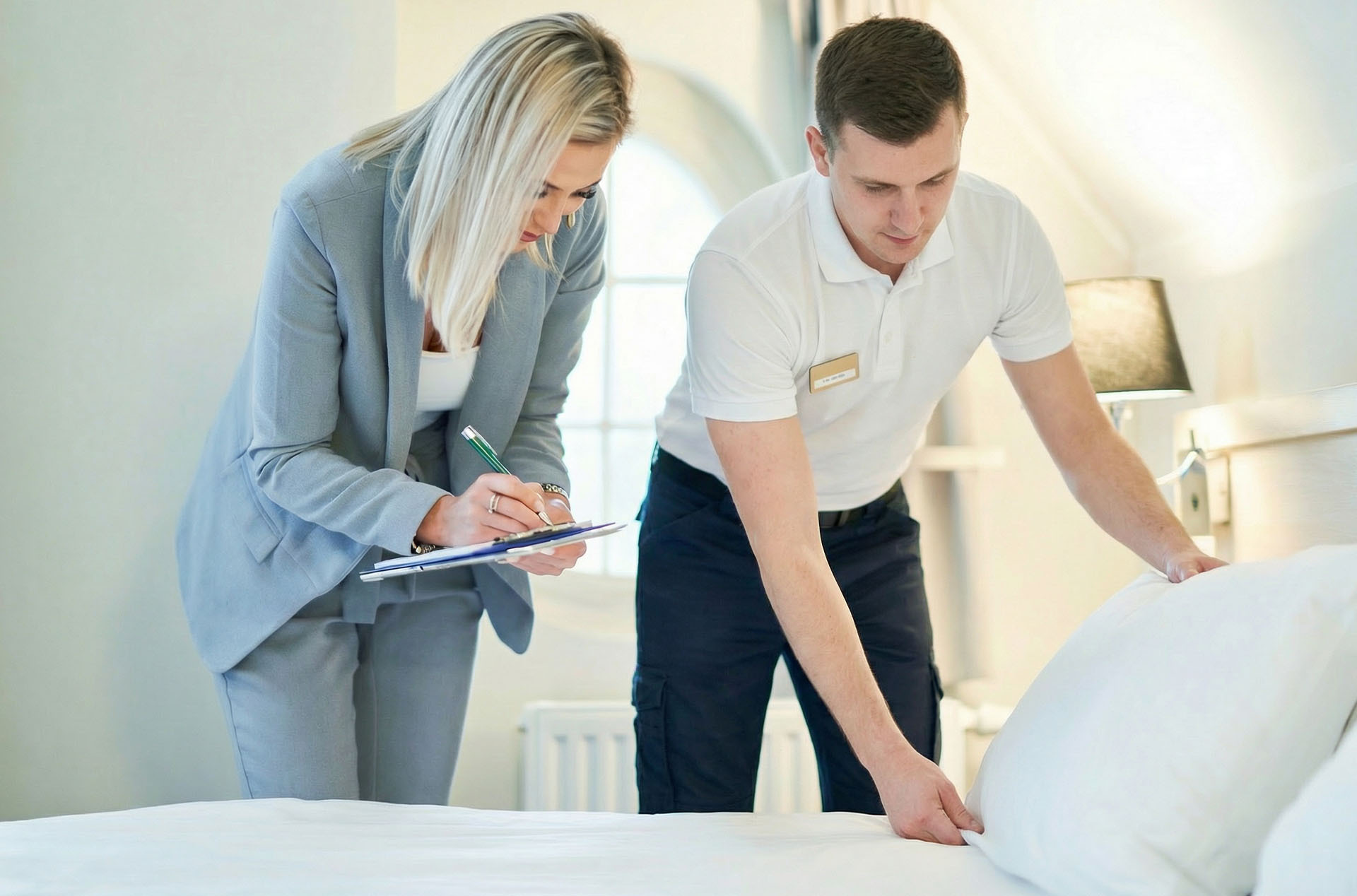
Measuring Training Effectiveness
Training programs should demonstrate measurable results. Track metrics that connect training investments to operational outcomes.
Key Performance Indicators
Monitor room inspection scores over time, comparing results before and after training interventions. Guest satisfaction scores related to cleanliness provide external validation of internal quality measures. Tracking rooms cleaned per hour reveals productivity trends, while monitoring incidents of re-cleaning indicates where quality standards need reinforcement.
Turnover metrics deserve particular attention. Properties with effective training typically see longer average tenure, fewer departures during probationary periods, and higher percentages of staff advancing to supervisory roles.
Continuous Adjustment
Use data to refine your training program. If certain topics consistently need refresher training, initial instruction may need strengthening. If new hires struggle with specific procedures, training materials for those areas warrant review.
Solicit feedback from housekeeping staff about training effectiveness. They know which instructions worked, which confused them, and what they wished they had learned earlier. This input guides meaningful improvements.
Frequently Asked Questions
How long should housekeeping training take for new hires?
Most properties find that foundational training requires one to two weeks of structured onboarding, followed by another two to four weeks of supervised practice before new housekeepers work independently. The exact timeline depends on property complexity, prior experience, and individual learning pace. Rushing this process typically results in quality problems and higher turnover.
What should be included in a housekeeping training checklist?
A comprehensive training checklist covers property orientation, safety protocols, cleaning procedures for each room type, chemical and equipment handling, quality standards, guest interaction guidelines, and administrative procedures like time tracking and communication channels. Include both practical skills and soft skills like problem-solving and teamwork.
How can we reduce housekeeping turnover through better training?
Effective training addresses several turnover drivers. It reduces stress by building competence, creates social connections through mentorship programs, demonstrates career potential through development opportunities, and shows organizational investment in employees. Properties that combine quality training with competitive compensation and supportive management see the strongest retention improvements.
What role does technology play in housekeeping training?
Technology supports training through video tutorials, digital checklists, mobile inspection applications, and communication platforms that enable real-time feedback. Digital tools also streamline administrative aspects of training, tracking completion, and identifying areas needing reinforcement. However, technology supplements rather than replaces human instruction and mentorship.
How do we train housekeeping staff during staffing shortages?
When operating short-staffed, focus training on the highest-impact areas: safety, core cleaning procedures, and guest-facing interactions. Use experienced staff efficiently, having them demonstrate techniques while cleaning actual rooms rather than conducting separate training sessions. Prioritize getting new hires to basic competence quickly, with plans for deeper skill development once staffing stabilizes.
How often should housekeeping refresher training occur?
Quarterly refresher sessions work well for most properties, addressing seasonal changes, new products or procedures, and areas where quality audits reveal improvement opportunities. Brief weekly touchpoints during shift briefings can reinforce standards without requiring dedicated training time. Annual comprehensive reviews help reset expectations and introduce significant updates.
What's the best way to train housekeepers on new cleaning products or equipment?
Introduce new products or equipment through hands-on demonstration sessions where staff can practice under supervision. Provide written quick-reference guides that remain accessible during shifts. Follow initial training with check-ins over the following weeks to address questions that arise from actual use. Safety training should always precede the introduction of new chemicals or equipment.