





Preventive Maintenance Strategies to Avoid Guest Complaints
Posted by Amenie on Apr 13, 2026
When occupancy is running high, and turnover windows are tight, maintenance issues that could have been caught during a routine inspection become room-out-of-order situations—or worse, live guest complaints. Every facility manager in hospitality knows the math: a single negative review citing a maintenance failure can influence dozens of future booking decisions, and pulling a room offline for emergency repairs during peak demand directly impacts revenue.
The challenge is not that hotel and spa operators lack awareness of maintenance needs. The challenge is building systems that keep facilities guest-ready consistently, even when staffing is lean and occupancy pressure is constant. That is exactly what preventive maintenance is designed to do—shift operations from reactive problem-solving to structured, scheduled upkeep that catches failures before they reach the guest and before they reach the review.
What follows is a practical framework: the strategies, checklists, and accountability structures that experienced hospitality operations teams use to reduce complaints, protect brand reputation, and keep properties performing at standard.
Why Guest Complaints Often Start with Maintenance Issues
What Causes Most Guest Complaints in Hotels?
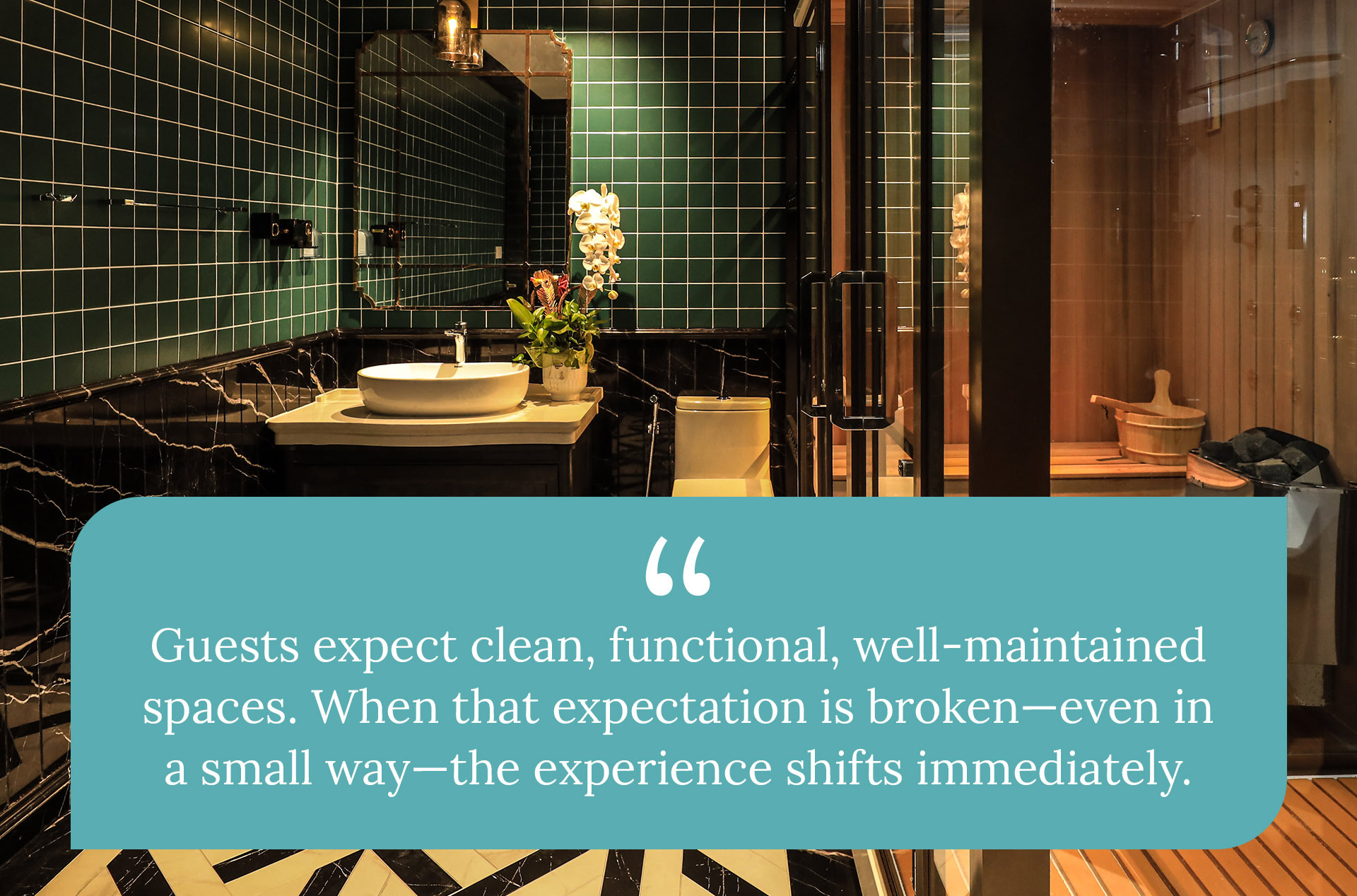
The majority of negative guest reviews trace back to facility conditions, not service attitude. Guests expect clean, functional, well-maintained spaces. When that expectation is broken—even in a small way—the experience shifts immediately. A front desk team can deliver exceptional service, but if the shower pressure is weak or the HVAC unit rattles through the night, the review will reflect the room, not the greeting.
Maintenance-driven complaints tend to fall into predictable categories. Understanding these categories is the first step toward preventing them.
High-Touch Failure Points
- Restroom and shower failures: Clogged drains, inconsistent water temperature, broken fixtures, soap or shampoo dispenser malfunctions, and deteriorating grout or caulk. Guests interact with these elements multiple times per stay, and any failure is immediately noticed.
- HVAC and air quality issues: Rooms that are too hot, too cold, too humid, or that carry stale or musty odors. HVAC failures are among the top drivers of room-change requests and negative reviews.
- Amenity dispenser breakdowns: Empty, clogged, or leaking bath and body dispensers create an impression of neglect. When a guest reaches for shampoo and nothing comes out, the property’s attention to detail is immediately questioned.
- Persistent odor issues: Odors from drains, carpets, HVAC systems, or poorly ventilated spaces are difficult for guests to overlook and are frequently cited in low-rated reviews. Targeted odor control products can be integrated into daily and weekly maintenance routines to address these proactively.
- Inconsistent room readiness: Burned-out light bulbs, stained linens, loose fixtures, or minor cosmetic damage that should have been caught during turnover inspections.
Other common maintenance-driven complaint triggers include:
- Stained or worn soft goods (linens, carpets, upholstery)
- Burned-out lighting or malfunctioning electrical outlets
- Doors, locks, or windows that stick, jam, or fail to seal properly
- Deteriorating exterior areas (walkways, parking, entrance signage)
- Inconsistent water temperature across guest room fixtures
What Is Preventive Maintenance in Hospitality?
Preventive maintenance is a systematic approach to facility upkeep that schedules inspections, servicing, and replacements before equipment fails or conditions deteriorate. Rather than waiting for a guest to report a dripping faucet or a malfunctioning air conditioning unit, preventive maintenance identifies and resolves these issues during routine checks.
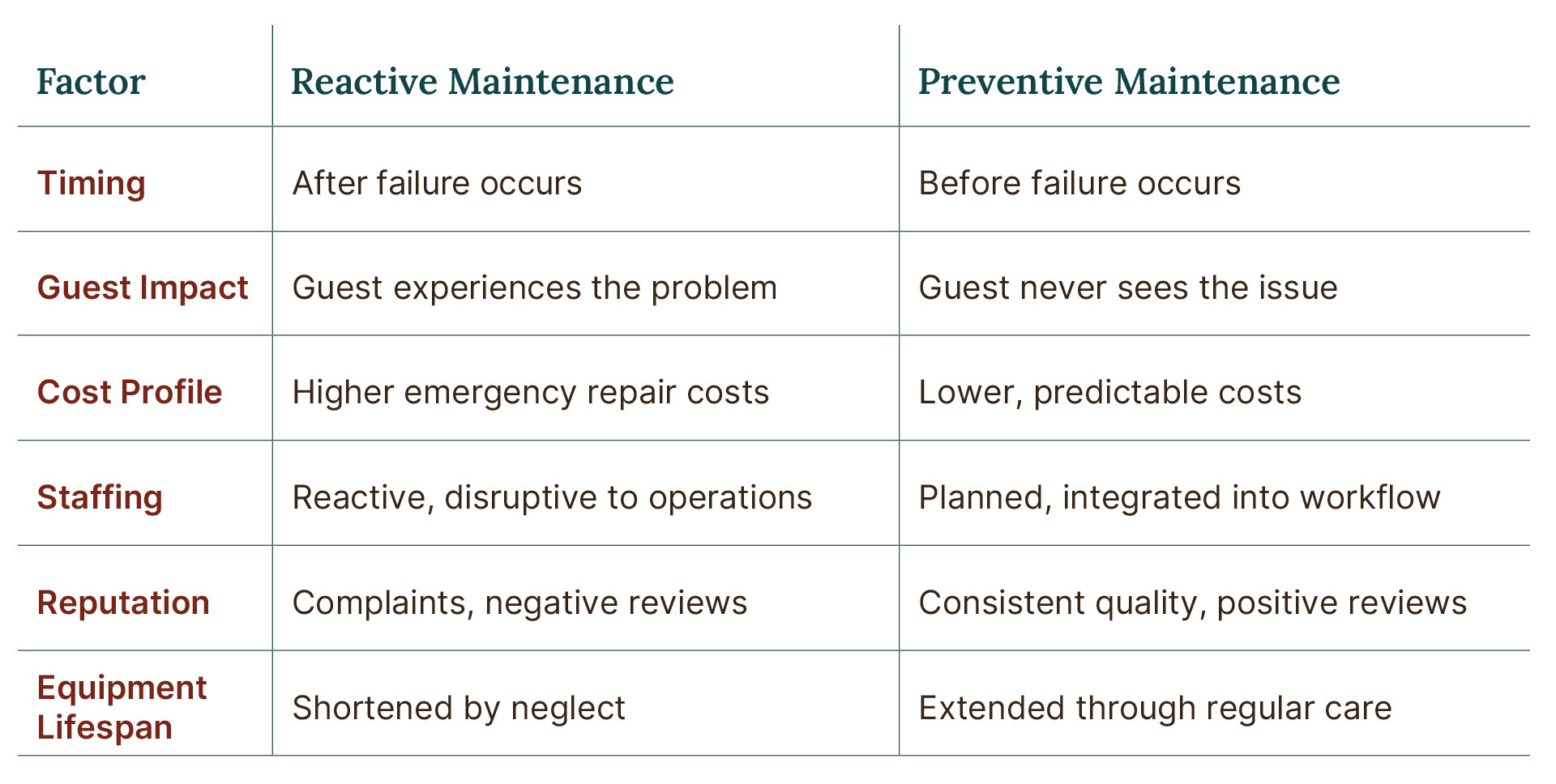
The distinction from reactive maintenance is fundamental. Reactive maintenance responds to problems after they occur—often after a guest has already experienced the failure. Preventive maintenance operates on a defined schedule, catching wear, deterioration, and potential failures before they reach the guest.
Reactive vs. Preventive Maintenance
For luxury, boutique, and full-service properties, the tolerance for maintenance lapses is especially low. Guests paying premium rates expect flawless environments. A preventive maintenance program at these properties must be more frequent, more detailed, and more rigorously enforced than at economy-tier operations. However, even limited-service hotels benefit significantly from structured preventive systems, as online reviews carry equal weight regardless of property tier.
Core Preventive Maintenance Strategies
The following strategies represent the essential components of a hospitality preventive maintenance program. Each is designed to be implemented independently or as part of a comprehensive system.
1. Standardized Room and Facility Inspection Schedules
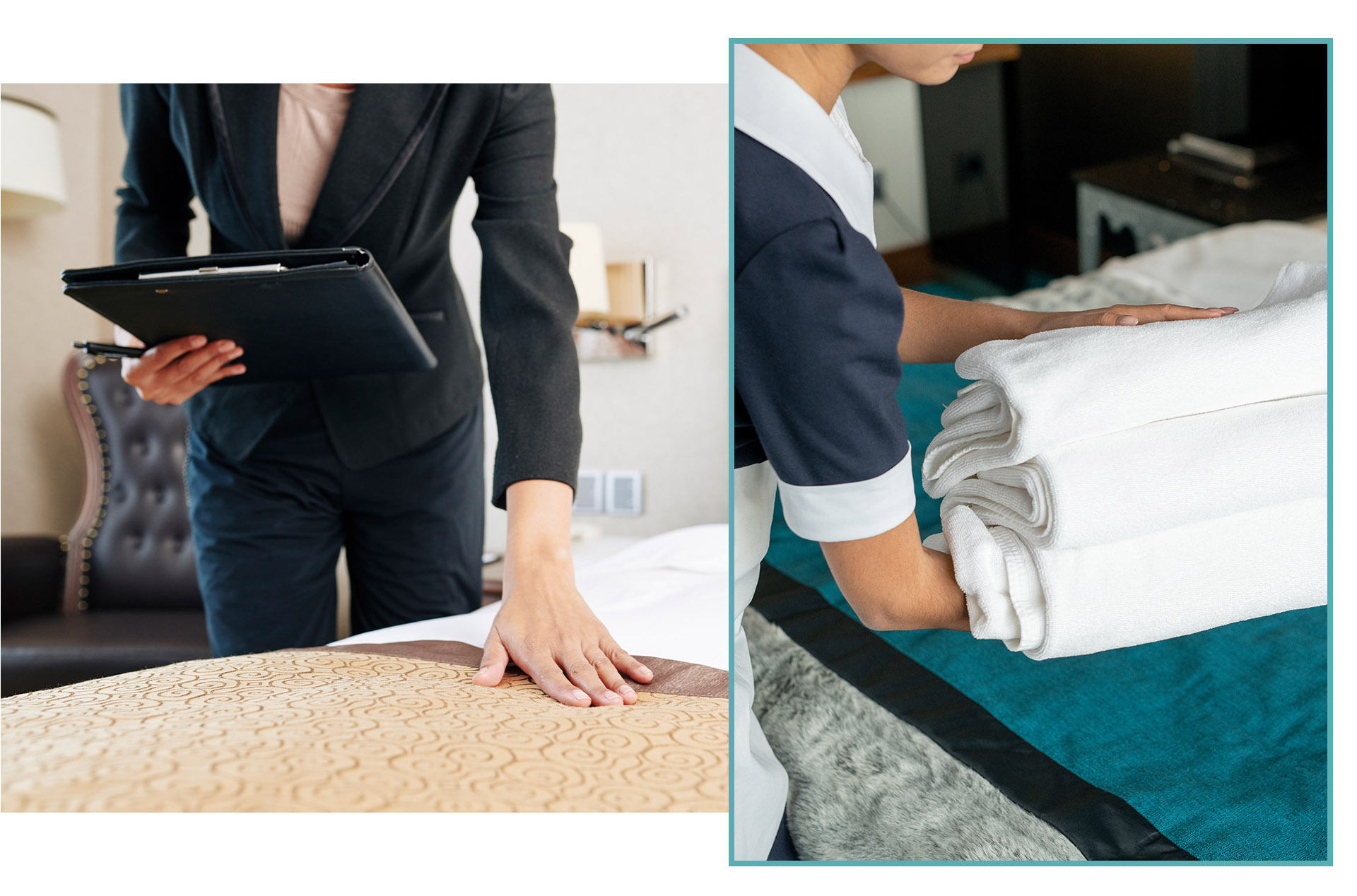
A preventive maintenance program only works if inspections happen consistently. Without a defined schedule, maintenance becomes dependent on individual initiative, which introduces variability and gaps.
Standardized inspection schedules assign specific checks to specific intervals—daily, weekly, monthly, and quarterly—with clear accountability for completion. The schedule should cover every guest-facing area: rooms, bathrooms, common areas, fitness centers, pool areas, spa treatment rooms, and exterior spaces.
Why it prevents complaints: Scheduled inspections catch deterioration—a slowly leaking faucet, a filter that needs replacement, a dispenser running low—before it reaches the point where a guest notices. Without inspections, these issues accumulate until they become visible failures.
Implementation framework:
- Create a master inspection checklist for each area type (guest room, bathroom, lobby, spa, pool, fitness center))—for a detailed framework, see The Perfect Room Inspection Checklist for Housekeeping Managers.
- Assign inspection frequency by area: daily for high-turnover spaces, weekly for common areas, monthly for mechanical systems
- Use a digital tracking system or paper-based log with supervisor sign-off
- Rotate inspectors periodically to prevent familiarity blindness
- Review inspection completion rates weekly at operations meetings
2. High-Touch Restroom and Shower Audits
Restrooms and showers are the most complaint-sensitive areas in any hospitality property. Guests spend significant time in these spaces, and their expectations for cleanliness, function, and comfort are exceptionally high. A dedicated audit protocol for restrooms and showers—separate from general room inspections—helps properties maintain the standard these areas demand.
Why it prevents complaints: Restroom-related complaints—slow drains, low water pressure, empty dispensers, mildew, broken fixtures—are among the most common and most damaging in guest reviews. A targeted audit catches these issues before they compound.
Audit checklist:
- Test water pressure and temperature at each fixture
- Check drain flow rate (slow drains should be flagged immediately)
- Inspect caulk and grout for discoloration, mold, or deterioration
- Verify all dispensers are filled, functional, and free of clogs—for properties using refillable systems, bulk shower amenities help maintain a consistent supply
- Test exhaust fans for adequate airflow
- Inspect all fixtures for leaks, corrosion, or looseness
- Check towel bars, hooks, and shower rods for stability
3. HVAC and Air Quality Management
HVAC issues are a leading cause of room-change requests and negative reviews. Guests are highly sensitive to temperature, air quality, and noise from climate control systems. A proactive HVAC management program prevents the most common failures: inadequate cooling or heating, musty odors from dirty filters or condensate buildup, and disruptive mechanical noise.
Why it prevents complaints: HVAC problems are difficult to resolve quickly once a guest reports them. Filter replacements, coil cleaning, and condensate drain maintenance are straightforward when scheduled but disruptive and costly when performed as emergency repairs during occupied stays.
Management framework:
- Replace or clean HVAC filters on a fixed schedule (monthly during peak occupancy, quarterly during off-season)
- Inspect and clear condensate drain lines quarterly to prevent overflow and odor
- Schedule annual coil cleaning and system performance assessments
- Test thermostat calibration in a rotating sample of rooms each month
- Train housekeeping to report unusual HVAC sounds, smells, or performance during turnover
- Monitor humidity levels in properties located in humid climates to prevent mold growth
4. Amenity and Supply Inventory Control
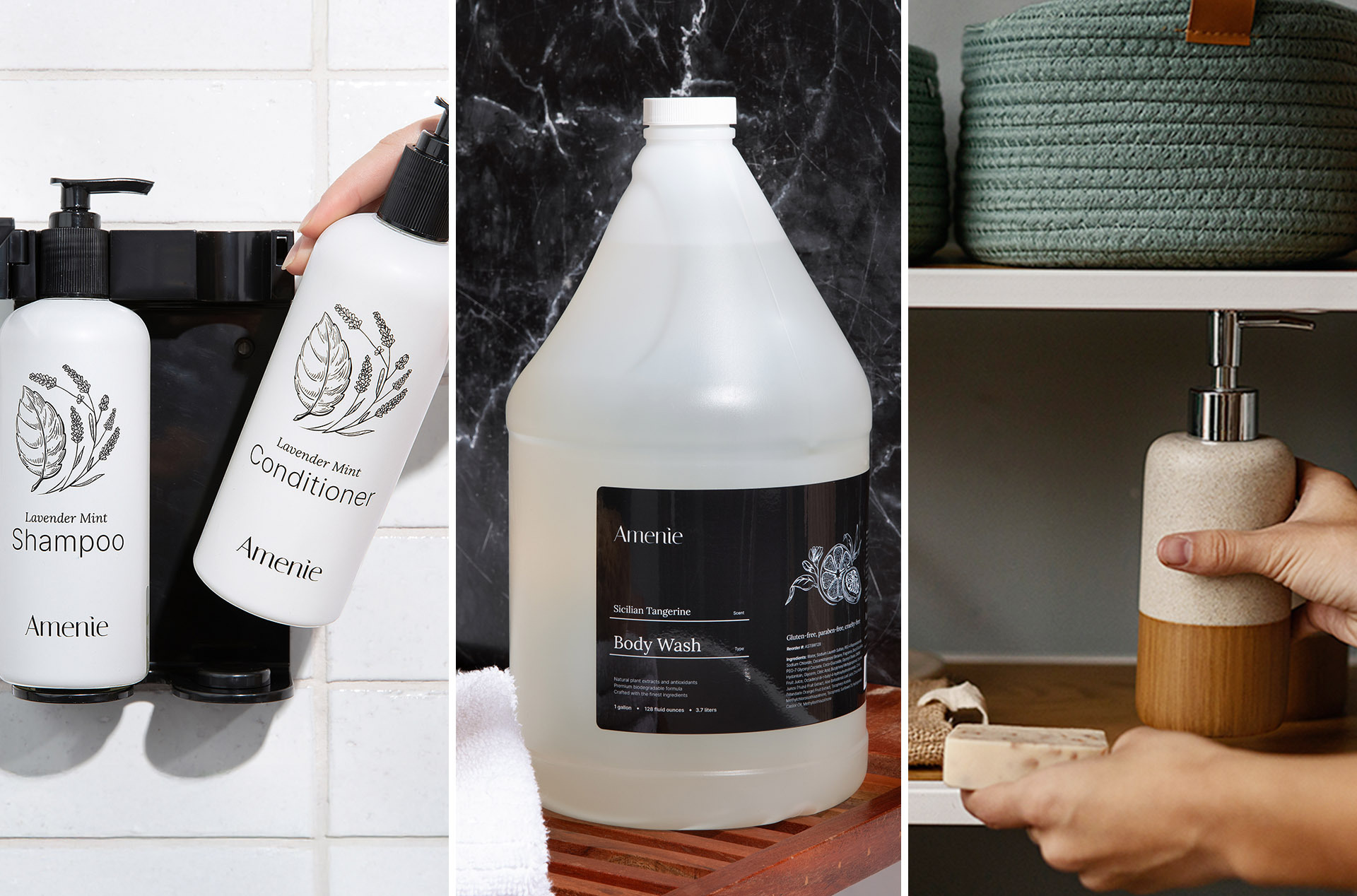
Running out of bath and body amenities, cleaning supplies, or restroom essentials during a guest’s stay is an avoidable failure. Inventory control for guest-facing supplies requires par levels, reorder triggers, and a system for verifying stock during room preparation. For properties using wall-mounted dispensers, Amenie’s bulk shower dispensers and bulk shower amenities offer consistent product quality and reliable supply that support this kind of system.
Why it prevents complaints: An empty shampoo dispenser or a room stocked with the wrong amenities signals disorganization. Guests interpret supply failures as a reflection of overall property quality, even when every other element of their stay is excellent.
Best practices:
- Set par levels for every guest-facing consumable, with automatic reorder triggers
- Include amenity verification as a required step in the room turnover checklist
- Inspect dispenser functionality during each room preparation (pump action, no clogs, correct product)
- Keep housekeeping carts stocked with supplies on each floor or wing to reduce response time when restocking is needed
- Conduct monthly supply audits to identify shrinkage, waste, or product inconsistencies
- Work with a reliable supplier that offers consistent product quality and dependable delivery schedules. Transitioning to bulk amenities can lower cost and restock cadence

5. Staff Training and Accountability Systems
Preventive maintenance is not exclusively the responsibility of the engineering or maintenance department. Housekeeping, front desk, and operations staff are often the first to encounter emerging issues—a flickering light, a slow drain, a strange odor—and their ability to identify and report problems is critical to catching failures early.
Why it prevents complaints: Properties with strong reporting cultures catch maintenance issues faster. When every team member understands what to look for and how to escalate, the gap between issue emergence and resolution shrinks dramatically.
Training and accountability framework:
- Train all guest-facing staff on basic facility awareness: what to look for during their normal routines
- Implement a simple, fast reporting system (mobile app, radio, or paper-based log) for flagging issues
- Establish clear escalation protocols: who receives the report, expected response time, and follow-up verification
- Include maintenance awareness in onboarding for all departments, not just engineering. For a deep dive, read our Housekeeping Training Program
- Recognize and reward staff who consistently identify issues before they reach guests
- Review reported vs. resolved metrics monthly to identify bottlenecks
6. Vendor and Supply Consistency
Inconsistent vendor performance creates downstream maintenance problems. When cleaning products change formulation without notice, when amenity deliveries arrive late, or when replacement parts vary in quality, the maintenance team is forced into reactive mode. Vendor management is a preventive maintenance strategy in its own right. Partnering with a supplier like Amenie that offers consistent product lines across bath and body, housekeeping supplies, and guest room essentials reduces the variability that drives reactive work.
Why it prevents complaints: Guests notice when the soap is different from their last visit, when a replacement fixture doesn’t match, or when a cleaning product leaves a residue. Consistency in supplies supports consistency in guest experience.
Vendor management practices:
- Establish service level agreements (SLAs) with key vendors covering delivery timelines, product consistency, and issue resolution
- Maintain approved product lists with specific SKUs to prevent unauthorized substitutions
- Schedule quarterly vendor performance reviews
- Keep backup vendor relationships for critical supply categories
- Centralize purchasing decisions to prevent ad-hoc ordering that introduces inconsistency
7. Complaint Pattern Tracking and Analysis
One of the most valuable preventive maintenance tools is the data a property already collects. Guest complaints, work order logs, room-change requests, and online reviews contain patterns that point directly to systemic maintenance issues. Properties that analyze this data can identify and resolve root causes rather than treating individual symptoms.
Why it prevents complaints: If the same room generates repeated HVAC complaints, or if drain issues cluster in a particular wing, the data will reveal it—but only if someone is looking. Pattern tracking transforms complaint data into a preventive tool.
Analysis framework:
- Log all maintenance-related complaints with room number, category, date, and resolution
- Review complaint logs monthly to identify recurring issues by location, type, and frequency
- Cross-reference guest review themes with internal work order data
- Flag rooms or areas that generate complaints above the property average for targeted deep inspection
- Use findings to adjust inspection schedules, capital improvement priorities, and staff training focus areas
What Should Be Included in a Hotel Preventive Maintenance Plan?
The following checklist provides a structured framework for preventive maintenance across daily, weekly, monthly, and quarterly intervals. Adapt it to the specific needs of your property type, size, and guest profile.
Daily
| ☐ | Inspect all guest room fixtures during turnover (plumbing, lighting, HVAC function) |
| ☐ | Verify amenity dispenser levels and functionality in each prepared room |
| ☐ | Check common area restrooms for cleanliness, supply levels, and fixture function |
| ☐ | Test lobby, hallway, and exterior lighting |
| ☐ | Log and escalate any issues identified during housekeeping rounds |
| ☐ | Confirm all reported work orders from the previous day are resolved or in progress |
Weekly
| ☐ | Inspect high-traffic flooring for damage, stains, or wear |
| ☐ | Test a sample of guest room HVAC systems for temperature accuracy and noise |
| ☐ | Audit pool, fitness center, and spa equipment for function and cleanliness |
| ☐ | Review open work order backlog and prioritize by guest impact |
| ☐ | Inspect exterior areas (entrances, parking, signage) for cleanliness and function |
| ☐ | Check emergency lighting, exit signs, and fire extinguisher accessibility |
Monthly
| ☐ | Replace or clean HVAC filters across guest rooms and common areas |
| ☐ | Inspect plumbing throughout the property for leaks, corrosion, or slow drains |
| ☐ | Audit all amenity and supply inventory against par levels |
| ☐ | Test a rotating sample of thermostats for calibration accuracy |
| ☐ | Inspect caulking, grout, and sealant in all wet areas |
| ☐ | Review complaint data for emerging patterns or recurring issues |
| ☐ | Inspect elevator operation, if applicable |
Quarterly
| ☐ | Deep-clean HVAC coils and inspect condensate drain lines |
| ☐ | Conduct a comprehensive room-by-room inspection (rotating schedule) |
| ☐ | Review and update vendor SLAs and supply agreements |
| ☐ | Assess soft goods (linens, carpets, upholstery) for replacement needs |
| ☐ | Test all life safety systems (fire alarms, sprinklers, emergency generators) |
| ☐ | Evaluate capital improvement needs and schedule upcoming projects |
| ☐ | Conduct staff refresher training on maintenance reporting protocols |
The master checklist above covers your property-wide cadence. For teams who want inspection-ready checklists by area, use the downloadable guides below — each is formatted for shift use with sign-off fields and frequency guides.
- Guest Room Preventive Maintenance Checklist
- Bathroom Preventive Maintenance Checklist
- Lobby & Common Areas Checklist
- Spa, Pool & Fitness Center Checklist
- Exterior & Grounds Checklist
How Strong Maintenance Systems Improve Guest Reviews
The relationship between facility maintenance and online reviews is direct and well-documented across the hospitality industry. Guests rarely leave reviews about routine excellence—they review when something stands out as exceptionally good or notably poor. Maintenance failures fall squarely into the latter category.
A single maintenance-related complaint—a broken shower handle, a room that smells musty, an HVAC unit that kept a guest awake—often becomes the defining detail of a negative review. These reviews carry disproportionate weight because prospective guests read them and project the experience onto their own potential stay.
Properties with strong preventive maintenance systems see fewer of these review-defining failures. The result is not necessarily more five-star reviews, but fewer one- and two-star reviews driven by avoidable facility issues. Over time, this shifts the overall review profile upward and strengthens brand perception.
The operational benefits extend beyond reviews. Consistent maintenance reduces emergency repair costs, extends equipment lifespan, decreases room-out-of-order rates, and improves staff morale by reducing the frequency of guest complaint escalations. It also creates a more predictable operating environment, which supports better budgeting and capital planning. Maintaining par levels on linens and having reliable sourcing for bath and body products are operational details that feed directly into this consistency.
For multi-location operators and hospitality brands, maintenance consistency across properties is particularly important. A guest who had a strong experience at one location expects the same standard at another. Preventive maintenance systems that are standardized across a portfolio help deliver that consistency.
Building Maintenance Systems That Protect Guest Experience
Most guest complaints in hospitality are preventable. They start not with a catastrophic system failure but with a slow accumulation of small, unaddressed maintenance issues—a clogged drain here, a worn seal there, an HVAC filter that went a month too long without replacement.
Preventive maintenance is the operational discipline that catches these issues before guests encounter them. It protects online reputation, reduces emergency repair costs, extends the life of building systems and equipment, and—most importantly—delivers the consistent, guest-ready environment that hospitality brands depend on.
The strategies and checklists outlined in this guide are designed to be practical and immediately implementable. Whether you manage a boutique hotel, a full-service resort, a day spa, or a multi-location hospitality portfolio, the core principles are the same: inspect systematically, maintain proactively, train comprehensively, and track everything.
High-performing hospitality operations invest in systems, not fixes. Preventive maintenance is one of the most impactful systems a property can build.
Related Resources
Continue exploring strategies for maintaining guest-ready hospitality environments:
The Perfect Room Inspection Checklist for Housekeeping Managers
Stocking a Housekeeping Cart: Essential Tips for Hotel and Airbnb Hosts
Bulk Amenities: Your Hotel’s Profitable, Eco-Friendly Solution
Frequently Asked Questions
What is the difference between preventive and reactive maintenance in hotels?
Preventive maintenance follows a scheduled approach—inspecting, servicing, and replacing components before they fail. Reactive maintenance responds to problems after they occur, often after a guest has already been affected. Preventive systems reduce emergency repair costs, minimize guest complaints, and extend the lifespan of building systems and equipment. Reactive maintenance tends to be more expensive, more disruptive, and more damaging to guest satisfaction and online reputation.
How often should hotel rooms be inspected for maintenance issues?
Guest rooms should receive a basic maintenance check during every turnover as part of the housekeeping process. Beyond daily checks, a rotating schedule of deeper inspections—weekly for high-use areas, monthly for mechanical systems like HVAC, and quarterly for comprehensive room-by-room assessments—provides the coverage most properties need. The frequency should be adjusted based on property age, occupancy rates, and complaint history.
What are the most common maintenance-related guest complaints?
The most frequently reported maintenance complaints include plumbing issues (slow drains, leaks, inconsistent water temperature), HVAC problems (noise, inadequate heating or cooling, musty odors), empty or malfunctioning amenity dispensers, burned-out lighting, stained or worn linens and carpets, and persistent odors in guest rooms or bathrooms. Most of these are preventable through routine inspection and scheduled servicing.
How does preventive maintenance affect hotel operating costs?
While preventive maintenance requires upfront investment in scheduling, staffing, and systems, it typically reduces overall operating costs by catching issues before they become expensive emergency repairs. It also decreases room-out-of-order rates (which directly impacts revenue), extends equipment lifespan, and reduces the frequency and cost of guest recovery efforts like complimentary upgrades or refunds triggered by maintenance failures.
What role does housekeeping play in preventive maintenance?
Housekeeping staff are often the first to encounter emerging maintenance issues during room turnovers—a flickering light, a slow drain, an unusual odor. Training housekeeping teams to identify and report these issues through a simple, fast reporting system is one of the most effective ways to close the gap between issue emergence and resolution. Properties with strong cross-departmental reporting cultures consistently catch problems before guests do.
Can small hotels and boutique properties benefit from preventive maintenance programs?
Smaller properties often benefit the most. With fewer rooms, a single room out of order represents a larger percentage of inventory—and a single negative review carries more weight relative to total review volume. A scaled preventive maintenance program does not require enterprise-level resources. Even a structured checklist system with clear accountability can significantly reduce complaint frequency and protect online reputation.