





How to Handle Hotel Billing Disputes and Refund Requests with Grace
Posted by Amenie on Feb 18, 2026
In hospitality, financial conversations can be among the most delicate interactions your team will navigate. A billing dispute handled poorly can unravel an otherwise exceptional stay. Yet a refund request managed with empathy and professionalism can transform a dissatisfied guest into a loyal advocate for your property.
The stakes are significant. Travel and hospitality is considered a high-risk category for chargebacks, with dispute rates often exceeding 1%—well above many other industries. Beyond the immediate financial impact, each unresolved billing concern incurs hidden costs, including processing fees, administrative time, and negative reviews that can affect future bookings.
Yet within every billing dispute lies an opportunity. When staff approach these conversations with the right mindset and tools, they can demonstrate the same attention to detail that guests experience throughout their stay—from the quality of your guest room supplies to the warmth of your welcome. This guide provides a framework for turning challenging financial conversations into moments that reinforce trust and build lasting guest relationships.
At a Glance
- Respond to billing concerns within 24 hours
- Verify folio and authorization records before responding
- Listen fully, then acknowledge with empathy
- Offer fair resolution: refund, credit, or future-stay gesture
- Document everything for chargeback defense
Common Causes of Hotel Billing Disputes
Before addressing how to handle disputes, it's essential to understand why they occur. Most billing concerns fall into predictable categories, and recognizing these patterns helps your team respond more effectively while identifying opportunities for prevention.
Genuine Billing Errors
Genuine billing errors stem from technical glitches, human error during checkout, and system synchronization issues. These can result in duplicate charges, incorrect room rates, or fees applied to the wrong account. Straightforward errors require swift correction and a sincere apology—nothing more, nothing less.
Policy Miscommunication
Policy miscommunication happens when guests misunderstand cancellation policies, deposit requirements, or incidental holds. This is particularly common with bookings made through third-party platforms where refund policies may appear inconsistent. The guest isn't trying to take advantage—they genuinely believed the terms were different.
Unmet Expectations
Unmet expectations drive disputes when a stay falls short of what was promised—whether related to cleanliness, service quality, or amenities. The dispute becomes a proxy for deeper dissatisfaction that wasn't addressed during the stay. This is why attention to detail matters, from the quality of your bath and body amenities to the responsiveness of your housekeeping team.
Unrecognized Charges
Unrecognized charges occur when guests don't recognize a charge on their statement—perhaps because the billing descriptor doesn't match your property's name—or simply forget about authorized purchases like minibar items or spa services. "Friendly fraud" remains a growing concern in hospitality, though these situations often stem from confusion rather than malicious intent.
Intentional Chargeback
Intentional chargeback abuse represents a small percentage of disputes where guests knowingly dispute legitimate charges to obtain services without payment. While this is a minority of cases, having proper documentation and clear policies protects your property.
Prevention: Building Financial Transparency
The most effective approach to resolving billing disputes is to prevent them altogether. Properties that prioritize transparent communication about financial matters experience significantly fewer chargebacks and refund requests.
Clear Communication at Every Touchpoint
Financial transparency begins before guests arrive and continues through checkout. During the booking process, prominently display cancellation policies, deposit requirements, and any fees that may apply. Confirmation emails should reiterate these terms in clear, accessible language—avoiding legal jargon that guests may skim past.
At check-in, staff should verbally confirm the rate, explain any authorization holds for incidentals, and ensure guests understand what will appear on their statement. This conversation takes only moments but prevents countless disputes.
The Importance of Billing Descriptors
A billing descriptor is the name that appears on a guest's credit card statement. When guests review their statement, your property's name should be immediately recognizable. If your billing descriptor shows a parent company or management group name instead of your hotel's name, guests may not connect the charge to their stay—leading to disputes for charges they actually authorized. Work with your payment processor to ensure the descriptor clearly identifies your property.
The Checkout Review
Encourage staff to review final bills with guests at checkout rather than simply sliding a folio under the door. This face-to-face moment provides an opportunity to explain any charges, answer questions, and address concerns before the guest leaves. It's far easier to resolve a billing question when the guest is standing at your front desk than after they've contacted their bank.
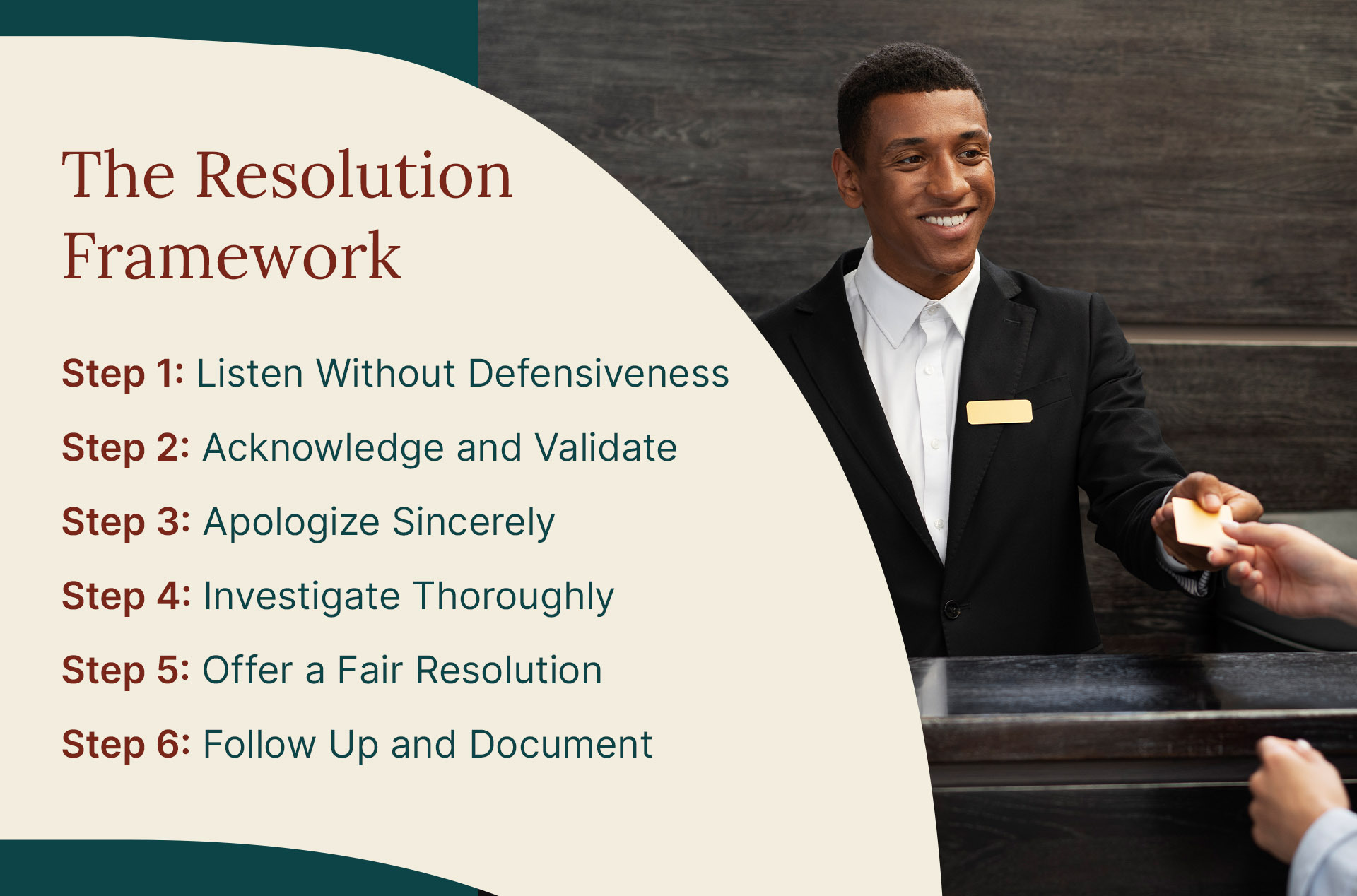
The Six-Step Resolution Framework
Despite the best prevention efforts, billing disputes will occur. How your team responds in these moments defines your property's reputation and determines whether a concerned guest becomes a lost customer or a loyal advocate.
Step 1: Listen Without Defensiveness
When a guest raises a billing concern, the first instinct may be to explain or defend. Resist this urge. Give the guest your complete attention and let them express their concern fully without interruption. Use body language that demonstrates engagement: maintain eye contact, nod to show understanding, and avoid crossing your arms.
Many guests don't raise billing concerns until after checkout—often via reviews or disputes filed with their bank. When a guest takes the time to bring a concern directly to your attention, they're giving you an opportunity. Honor that by listening deeply.
Step 2: Acknowledge and Validate
Once the guest has shared their concern, acknowledge what you've heard by paraphrasing their key points. This confirms understanding and demonstrates attention. Validation doesn't mean agreeing that an error occurred—it means acknowledging that the guest's concern is legitimate and worthy of attention.
Step 3: Apologize Sincerely
Offer a genuine apology for the inconvenience, regardless of who is at fault. This isn't about admitting wrongdoing—it's about expressing regret that the guest has experienced frustration. Avoid defensive language like "Our policy clearly states..." or "You should have read the terms." The goal is to find a solution, not win an argument.
What to Say: Sample Scripts
- Opening: “I'm sorry you've had to deal with this—let me look into it right now.”
- Clarifying: “So if I understand correctly, you were charged for two nights when you only stayed one—is that right?”
- Resolving: “Here's what I'm seeing on the folio, and here are the options I can offer.”
Step 4: Investigate Thoroughly
Before proposing a resolution, gather all relevant information. Review the reservation details, check-in documentation, and any signed agreements. Be transparent: "I'd like to review your account thoroughly. May I have just a few minutes to pull up all the details?" This demonstrates diligence and prevents hasty decisions.
Step 5: Offer a Fair Resolution
Once you understand the situation, propose a resolution that addresses the guest's concern while being fair to your property. If an error occurred, correct it promptly. If charges are accurate but the guest misunderstood the policy, explain with empathy while exploring appropriate accommodations.
When a refund is warranted, process it immediately rather than promising to "look into it." For situations where a full refund isn't appropriate, consider alternatives: partial credits, complimentary services during a future stay, or loyalty points. These gestures typically cost far less than a chargeback.
Step 6: Follow Up and Document
After resolving a billing concern, follow up with the guest to confirm their satisfaction. A brief email shows you care beyond the immediate transaction. Document all communications and resolutions—this record protects your property if the guest later files a chargeback and provides data for identifying systemic issues.
Chargeback Prevention and Response
When a guest bypasses direct communication and files a chargeback through their bank, the dynamics shift significantly. Hotels often have a short window—sometimes only a few weeks or less—to respond with documentation, depending on the card network and dispute type.

Building a Strong Defense
Successful chargeback responses require comprehensive documentation. Keep detailed records of every guest interaction: signed registration forms, credit card authorization agreements, check-in timestamps, and any communication about services or charges. Digital check-in systems that capture acknowledgments of terms are particularly valuable.
When preparing your response, address the specific reason code provided by the card network. Gather evidence that directly contradicts the guest's claim. Keep the response professional and factual—emotional language can work against you.
Reducing Incidental Chargebacks
Minibar, room service, parking, and spa charges are among the most frequently disputed. Reduce these by posting clear signage in rooms and at service points indicating that minibar items, spa services, and parking are available as paid add-ons rather than complimentary amenities. Communicate authorization hold amounts at check-in, provide itemized receipts, review charges at checkout before processing, and contact guests before charging for damages. Many incidental disputes stem from surprise rather than disagreement—transparency and clear expectations from the start are your best prevention tools.
Empowering Your Team
Front-line staff are your first responders when billing concerns arise. Their ability to handle these situations confidently impacts guest satisfaction and your bottom line.
Grant decision-making authority
Waiting for management approval while a frustrated guest stands at the front desk only intensifies negative emotions. Define specific thresholds for refunds and credits that employees can authorize without escalation.
Train on financial conversations
Incorporate billing dispute scenarios into regular training. Focus not just on what to say, but how: tone, body language, and pacing all contribute to guest perception.
Create psychological safety
Staff who fear criticism will default to rigid policy enforcement that escalates disputes. Analyze outcomes for learning, not blame. The investment in confident problem-solvers returns far more value than occasional generous resolutions cost.
Turning Disputes into Loyalty
The service recovery paradox suggests that guests whose problems are resolved effectively can become more loyal than those who never experienced issues. Every dispute is an opportunity to demonstrate your commitment to guest satisfaction.
After resolving a concern, express your hope that the guest will return. Consider a meaningful gesture: a handwritten note, an upgrade on their next visit, or a small gift of premium bath and body amenities to take home. Sincerity matters more than the cost.
Analyze dispute patterns to identify systemic issues. Are certain charges frequently questioned? Do disputes cluster around particular booking channels? A property that treats disputes as learning opportunities will experience fewer of them over time.

Building a Reputation for Fairness
Properties known for transparent billing practices attract guests who value integrity—guests who are often less price-sensitive and more likely to become repeat visitors. Just as the quality of your hotel towels and single-use amenities communicates care for guest comfort, your approach to billing concerns communicates care for guest trust. Both bring guests back again and again.
Related Reading
- How to Train Hotel Staff for Better Guest Communication and Service
- The Perfect Room Inspection Checklist for Housekeeping Managers
- Stocking a Housekeeping Cart: Essential Tips for Hotel and Airbnb Hosts
Frequently Asked Questions
How quickly should we respond to billing disputes?
Acknowledge within 24 hours, resolve within 48 hours when possible. For chargebacks, response windows are typically a few weeks or less, depending on the card network.
What is a billing descriptor and why does it matter?
It's the name on a guest's credit card statement. If it shows your management company instead of your hotel name, guests may not recognize the charge and dispute it.
What authority should front-desk staff have?
Many properties allow staff to issue refunds up to a set percentage of the stay value without management approval. The key is empowering them to resolve common concerns without delay.
How do we balance being guest-friendly with protecting revenue?
Consider lifetime value. A $100 resolution today may retain a guest who books $5,000 over five years. Reserve firm positions for clear fraud; show flexibility for genuine misunderstandings.
How can we reduce chargebacks from incidentals?
Clearly communicate authorization holds at check-in, provide itemized receipts, review charges at checkout, and contact guests before charging for damages. Most disputes stem from surprise, not disagreement.
What if a guest threatens to dispute a legitimate charge?
Stay calm and professional. Explain your documentation. Offer to work toward a resolution, but don't refund clearly legitimate charges out of fear. Document the conversation for your chargeback response.