




How to Create a Relaxing Massage Room Environment That Guests Notice
Posted by Amenie on Apr 22, 2026
Walk into enough spa treatment rooms, and you start to notice a pattern: the ones that feel genuinely calming share a handful of deliberate design choices. The ones that fall flat usually lack one or two of those same elements—too much overhead light, a color palette that reads clinical rather than restful, linens that feel like an afterthought.
A massage room isn’t just a place to put a table. It’s a contained environment that needs to work on the guest’s nervous system before the therapist’s hands do. The best spa room design achieves that through a combination of sensory decisions: what the guest sees, hears, smells, and touches from the moment the door opens. None of these elements are expensive on their own. But getting them right, together, is what separates a treatment room that guests mention in reviews from one they forget by checkout.
These massage room ideas are drawn from years of working with boutique hotels, resort spas, and standalone wellness facilities—operations that have to justify every design dollar with repeat bookings and guest satisfaction scores.
Start with Layout, Not Aesthetics
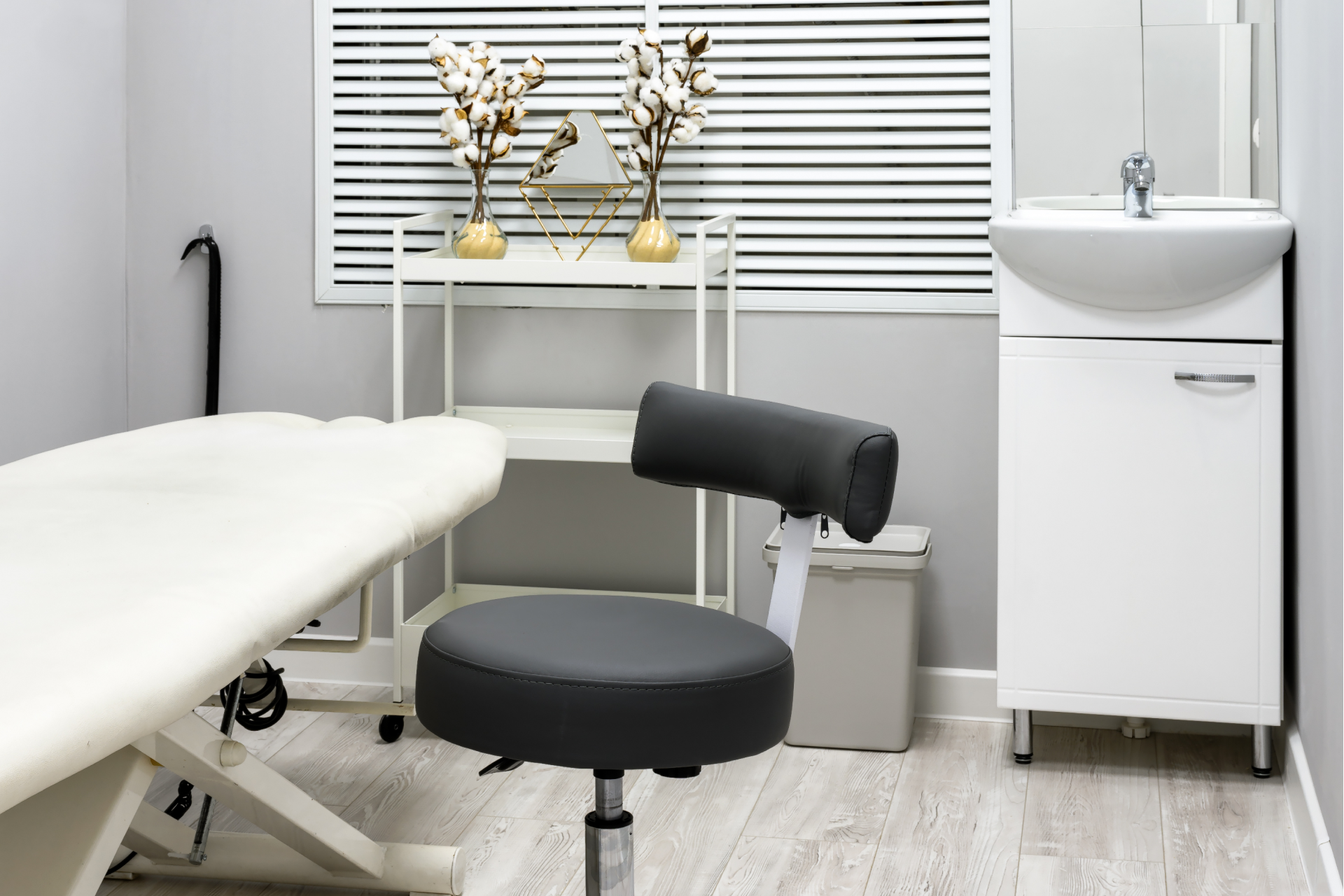
The most common mistake in spa treatment room design is starting with a Pinterest board instead of a floor plan. Before you pick paint colors or order decor, figure out how a therapist actually moves through the room during a 60-minute session. They need clear access around all four sides of the table, a surface within arm’s reach for oils and supplies, and a path to the door that doesn’t require the client to watch them navigate around furniture.
A standard massage room layout needs a minimum of 10’ x 12’ to accommodate a treatment table, a small supply cart, a stool, and adequate circulation space. Anything smaller and the therapist is bumping into walls during long strokes. Anything significantly larger and you lose the sense of enclosure that makes a massage room feel intimate rather than empty.
Position the table so the head faces away from the door. This is a small detail that matters more than most operators realize. Clients instinctively relax more deeply when they aren’t facing the entry point of a room. If space permits, angle the table slightly off the wall centerline—it creates a subtle visual asymmetry that reads as more organic and less institutional.
For the table itself, choose one that fits the room’s proportions and service menu. Properties running a mix of massage, facials, and body treatments benefit from a versatile stationary table or an electric model that can adjust for different modalities. A curated treatment table collection geared toward hospitality will range from portable setups for flexible spaces to fully motorized tables for dedicated treatment rooms.
Shop Treatment Tables
Find the right table for every modality.
From portable Stronglite setups for flexible spaces to fully motorized electric tables for dedicated treatment rooms — curated for hospitality use.
Shop Treatment Tables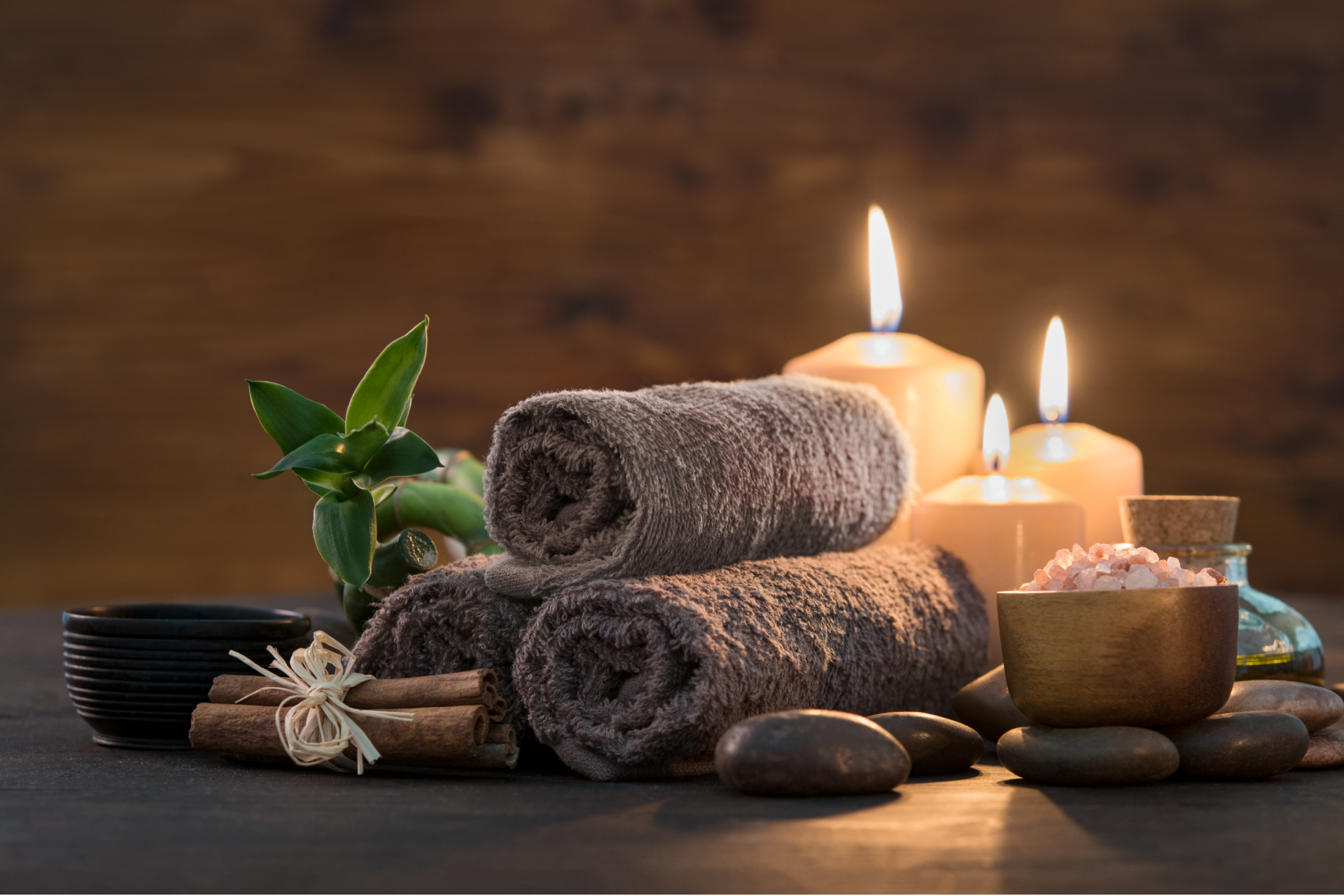
Lighting Sets the Emotional Tone
Lighting is the single fastest way to ruin or rescue a massage room’s atmosphere. Overhead fluorescents are the obvious offender, but even recessed downlights can feel harsh if they’re pointed at the table. The goal for massage room lighting is layered, indirect, and controllable.
Install a dimmer on every light source in the room. This sounds basic, but a surprising number of spa renovations skip this step and end up taping cardboard over light switches. A proper dimmer lets the therapist set the room for each client and each time of day without improvisation.
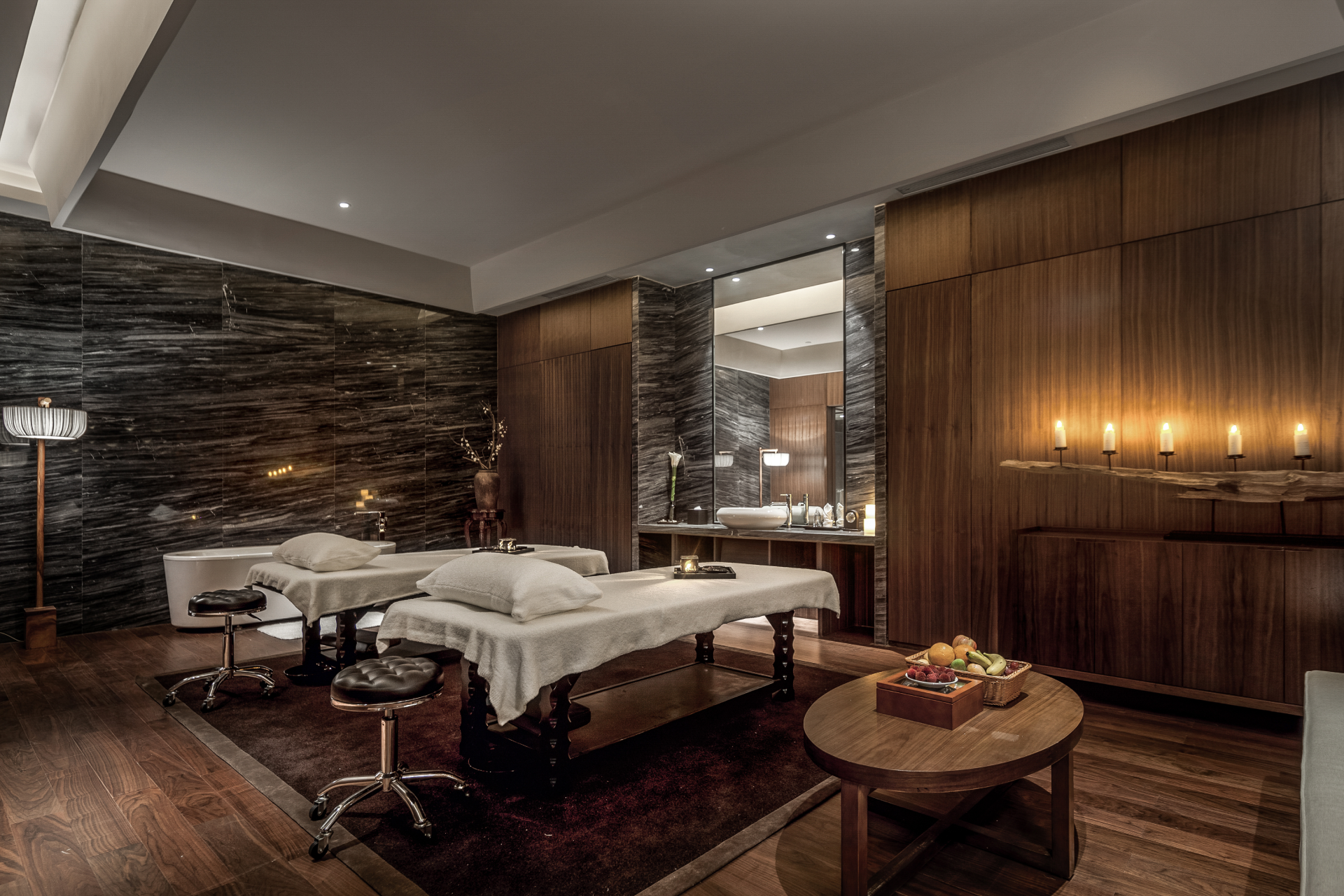
Wall sconces at hip height or below create a warm wash of light without hitting the client’s face. Battery-operated LED candles placed on a low shelf or inside a wall niche add warmth without fire risk—pairing them with handcrafted candle holders in brass, ceramic, or wood elevates them from functional to intentional. Backlit panels with warm-toned diffusion fabric work well as a feature wall behind the head of the table, giving the therapist enough light to work while keeping the client’s visual field soft.
The color temperature of the bulbs matters as much as their placement. Aim for 2700K or below—the warm amber range. Anything above 3500K starts to feel like a dental office. If you’re investing in a full room build-out, consider circadian-adjustable LEDs that shift color temperature throughout the day to align with natural light cycles. Guests who book afternoon treatments particularly benefit from this.
A Restful Color Palette Goes Beyond Beige
The default spa color palette—off-white walls, beige accents, maybe a few bamboo touches—is safe but forgettable. A zen massage room with genuine atmosphere takes the palette a step further by committing to a mood rather than defaulting to neutral.
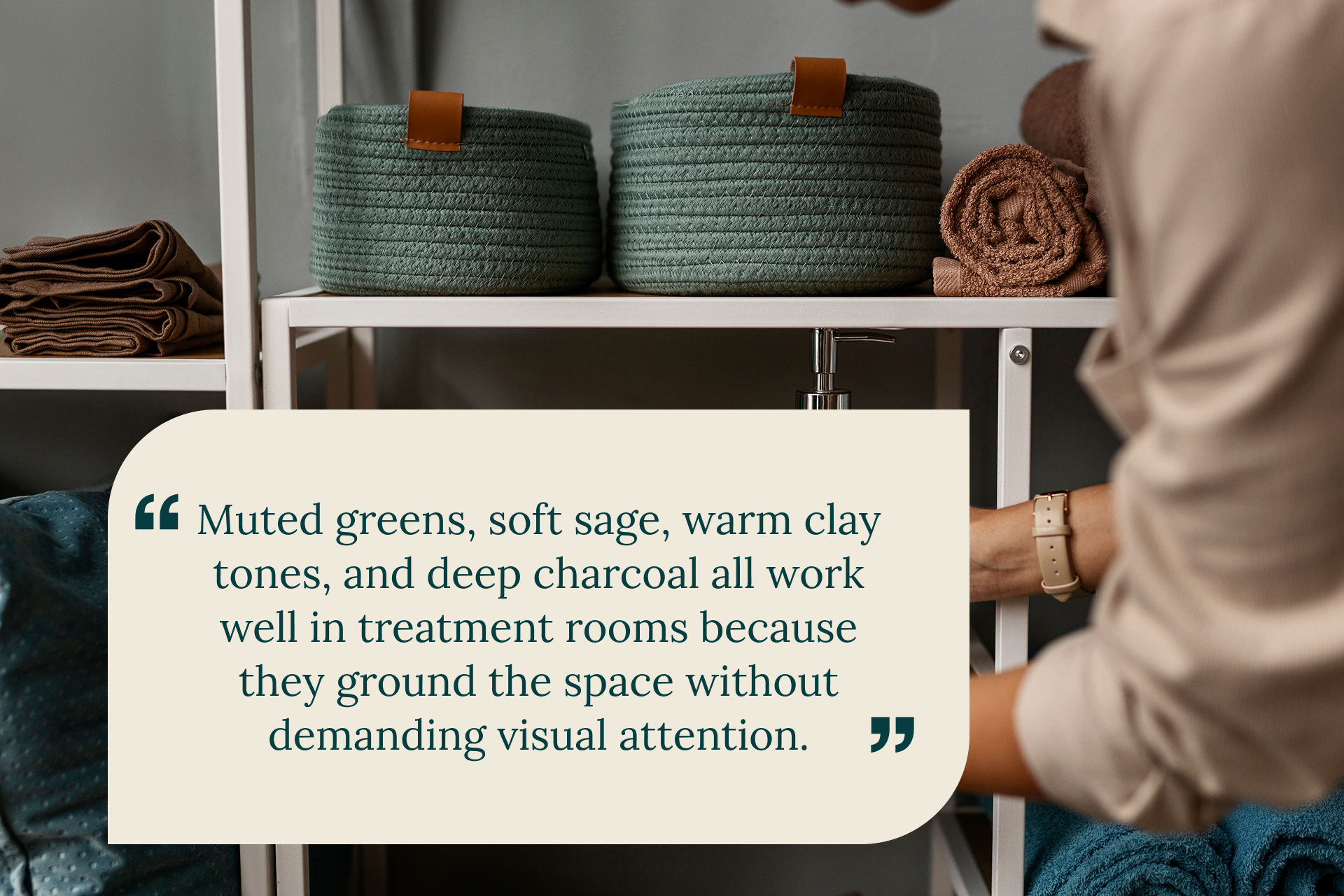
Muted greens, soft sage, warm clay tones, and deep charcoal all work well in treatment rooms because they ground the space without demanding visual attention. The key is keeping the palette to two or three colors maximum and letting texture do the rest. A room with sage green walls, warm white linens, and a single piece of dark wood furniture has more visual depth than one painted entirely in cream with half a dozen accent colors fighting for attention.
Natural materials reinforce a zen aesthetic more effectively than paint alone. Stone or wood-look tile on a single accent wall, a live-edge shelf for product display, or a handcrafted ceramic or stone vase holding a few stems of dried botanicals—these elements connect the room to the natural world without cluttering the space. Dried arrangements last one to three years with minimal care, which makes them far more practical in a treatment room than fresh flowers that need replacing weekly. The Amenie x Bloomist collection is specifically curated for hospitality interiors, and a single well-chosen piece from that range can anchor a treatment room’s design better than a dozen mass-market accessories.
Nature-inspired hospitality décor
The Amenie x Bloomist Collection
Handcrafted candle holders, preserved botanicals, and nature-inspired ceramics — thoughtfully curated for commercial treatment rooms. No watering required.
Shop Amenie x Bloomist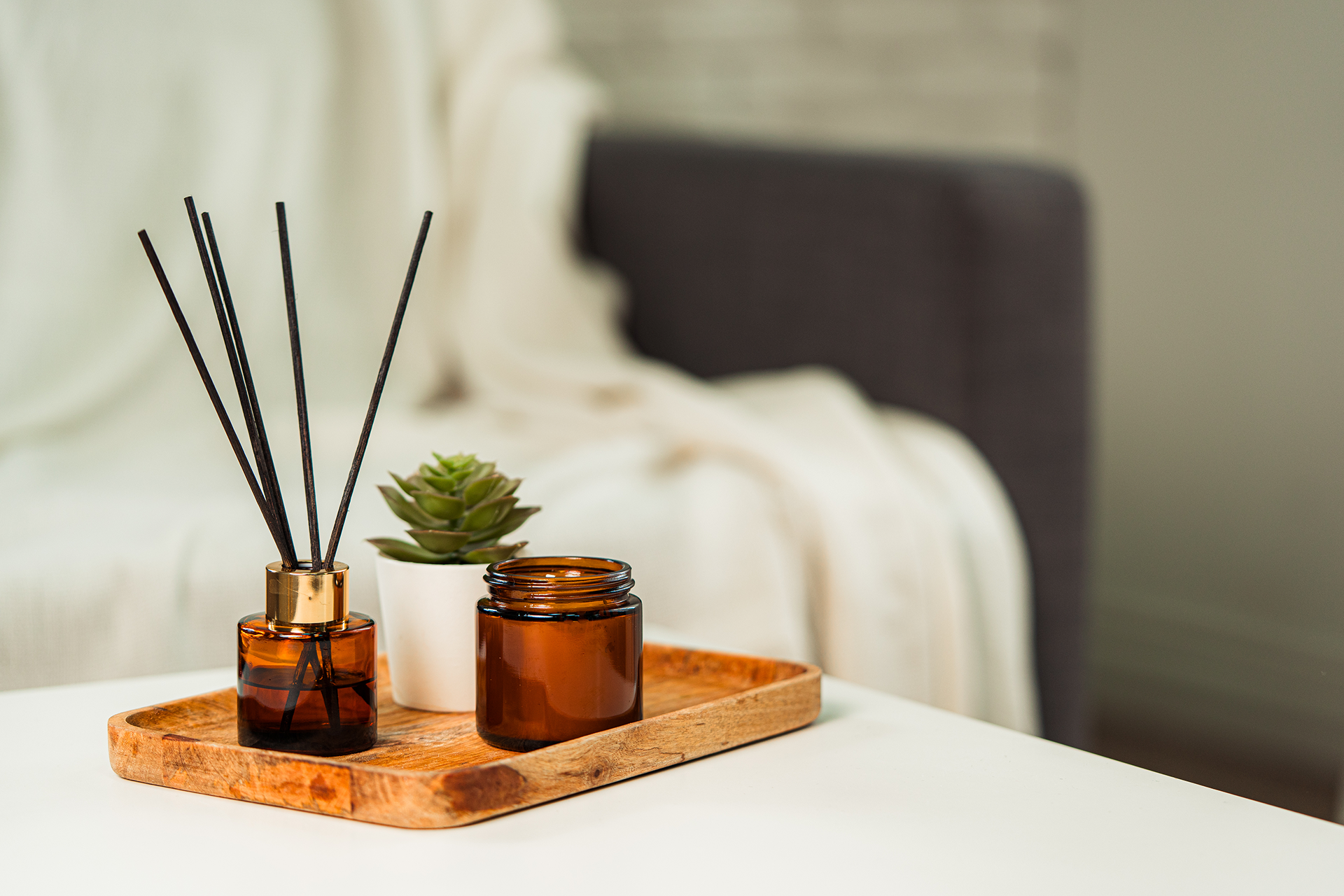
Aromatherapy and Sound: The Invisible Design Layer
Scent and sound are the two elements guests can’t see, which is exactly why they’re so effective. A guest might not consciously register the essential oil diffuser or the ambient soundscape, but their nervous system responds to both within seconds of entering the room.
For aromatherapy, choose one or two signature scents and use them consistently. Lavender, eucalyptus, and bergamot are classics for a reason—they’re widely tolerated, don’t trigger fragrance sensitivities as often as synthetic blends, and have well-documented calming or invigorating properties. Use a cold-air diffuser rather than a heat-based one; it preserves the essential oil’s therapeutic compounds and doesn’t carry the fire risk of a candle warmer. Place the diffuser near the room’s air intake so the scent distributes evenly rather than concentrating near one corner.
Your bath and body products contribute to the scent profile too. If the massage oil or lotion smells completely different from the room’s diffuser, the competing fragrances create sensory noise instead of calm. Properties that align their amenity line with their treatment room’s signature scent create a more cohesive experience. Look for bath and body lines with lavender-mint, citrus, or botanical-forward scent profiles that complement rather than compete with your ambient aromatherapy program.
Build a cohesive scent program
Bath & body lines that belong in a treatment room.
Lavender mint, botanical-forward, and citrus-led formulas in bulk refill and amenity formats — aligned to your room's scent profile, not competing with it.
Shop Spa Bath & BodyFor sound, invest in a dedicated Bluetooth speaker that stays in the room—not one the therapist carries in and out. Mount it behind a fabric panel or on a high shelf where it’s out of sight. Nature sounds, ambient tones, or very minimal instrumental music work better than anything with lyrics or a recognizable melody. The volume should be just loud enough that the guest notices silence if it stops, but not loud enough to identify individual instruments.
Linens and Textiles: Where Guests Judge Quality
Guests may not remember your wall color, but they absolutely remember how the linens felt. A scratchy massage table sheet, a thin blanket, or a rough face cradle cover can undermine an otherwise beautiful room in the first thirty seconds of a session. This is one area where the operational and aesthetic decisions overlap completely.
Use fitted sheets designed specifically for massage table dimensions rather than repurposing flat sheets from the hotel linen closet. They stay put during the session, look cleaner and more professional, and survive commercial laundering better than standard bedding. For blankets, a medium-weight option that breathes is ideal—guests run cold during massage but overheat under heavy fleece. Purpose-built spa linens and towels designed for treatment environments hold up to the high-temperature laundering and oil exposure that kills standard hospitality textiles within a few months.
A towel warmer is one of the highest-return investments in massage room design. Handing a guest a warm towel at the end of a treatment extends the relaxation response and creates a sensory memory that drives word-of-mouth. It also signals operational polish—the kind of detail that spa directors at high-performing properties build into their SOPs rather than leaving to chance.
For the color of your textiles, stay within the room’s palette. White linens are classic and signal cleanliness, but they require aggressive stain management with massage oils. Soft greys, warm taupes, or muted greens are increasingly popular in upscale spas because they hide oil residue better while still feeling fresh and intentional.
The Details That Create a Sense of Arrival
The zen vibe in a massage room isn’t really about any single element—it’s about the cumulative effect of thoughtful decisions that remove visual noise and sensory clutter. A few finishing touches make the difference between a treatment room that looks designed and one that feels it.
Eliminate visible clutter. Store supplies in closed cabinets or drawers, not open shelving. If your therapists use a supply cart, choose one with doors or a cover. Exposed product bottles, stacked towels on open wire racks, and visible cleaning supplies break the fourth wall of the spa experience. Keep the guest-facing environment clean of operational reminders.
Add one focal point. A single piece of art, a textured wall panel, a sculptural ceramic object, or a simple branch arrangement in a handcrafted vase. The human eye needs something to rest on—one deliberately placed object is more calming than a bare wall, and infinitely more calming than a wall covered in small framed prints. This is where biophilic decor pieces—preserved botanicals, nature-inspired ceramics, or artisan-made accents—earn their place in a commercial treatment room. They don’t require watering, dusting is minimal, and they photograph well for marketing.
Think about the transition. What happens between the hallway and the treatment table? A brief moment of sensory shift—the light dimming, the scent arriving, the sound changing—signals to the guest’s brain that they’re entering a different kind of space. Even something as simple as a heavy curtain inside the door or a short, dimly lit entry alcove creates that threshold experience. Hotels and resorts that nail this transition consistently see it mentioned in guest reviews.

Give Guests a Place to Land
A guest who walks in and immediately has to drape their clothes over a chair arm, tuck their bag under the table, and figure out where to leave their shoes hasn’t started relaxing yet. It’s a small gap, but it interrupts the arrival before the session even begins.
This doesn’t require much square footage. A row of wall hooks near the door, a slim bench with a lower shelf, or even a simple basket on a low surface handles the practical need without eating up floor space. In a larger room, a narrow console table with a hook rail above it gives guests a clear place to undress and get organized. What matters is that something is clearly there for them—when guests can see that a spot was set aside for their belongings, it registers as care rather than an oversight.
The material should match the rest of the room. Matte black hook rails read modern and minimal. A wooden peg rack with a live-edge shelf fits an organic or biophilic aesthetic. Woven baskets or rattan organizers add texture while keeping things contained. Whatever you choose, prioritize something easy to wipe down—guests in destination markets occasionally leave behind damp towels or sandy shoes, and a surface that cleans in seconds is worth more than one that photographs well.
A low stool or bench near the storage area makes shoe removal easier and tells guests the room was thought through from the moment they walked in, not just from when they get to the table. Small details like this rarely appear in a room’s visual design, but they consistently show up in reviews.
Designing a Room That Works as Hard as Your Therapists
A relaxing massage room isn’t an accident—it’s engineered. Every surface, every light source, every scent, and every textile either contributes to or detracts from the guest’s ability to let go. The operators who take spa room design seriously see the returns in higher rebooking rates, stronger reviews, and therapists who stay longer because their workspace feels intentional rather than thrown together.
The good news is that most of these massage room ideas are achievable without a full renovation. A dimmer switch, better linens, a towel warmer, one good piece of decor, and a consistent scent program can transform a generic treatment room into one that guests remember. Start with the elements your clients touch, smell, and experience the moment they walk in—those create the strongest impressions—and build outward from there.
Amenie offers a curated range of spa equipment, treatment linens, bath and body products, and nature-inspired decor designed to help hospitality operators create the kind of spa ambiance that brings guests back.
Everything in one place
Outfit your treatment room from Amenie.
Treatment tables, spa linens, towel warmers, bath & body programs, and nature-inspired décor — curated for hospitality operators who take the guest experience seriously.
Shop Spa Equipment Shop Amenie x BloomistFrequently Asked Questions
What colors are best for a massage room?
Muted, nature-inspired tones work best: sage green, warm clay, soft grey, and deep charcoal. Limit the palette to two or three colors and use texture for depth. Avoid bright whites, which feel clinical under dim lighting.
How big should a massage room be?
A minimum of 10’ x 12’ accommodates a treatment table, supply cart, and adequate circulation. Slightly larger rooms (12’ x 14’) allow for couples’ treatments or additional equipment without feeling cramped.
What temperature should a spa massage room be?
Between 72°F and 76°F (22–24°C). Guests cool down during a massage as their metabolism slows, so err on the warmer side. Individual room temperature controls are worth the HVAC investment.
How do you make a massage room smell good naturally?
Use a cold-air essential oil diffuser with one or two simple scents like lavender, eucalyptus, or bergamot. Avoid synthetic fragrance sprays. Align the diffuser scent with your treatment products for a cohesive experience.
What lighting is best for a massage room?
Warm-toned (2700K or below), indirect, and dimmable. Wall sconces, LED candles, or backlit panels work well. Avoid overhead downlights aimed at the treatment table.