




How to Choose a Massage Table for Your Spa
Posted by Amenie on Apr 24, 2026
A massage table is one of the few purchases in a spa that your therapists and your guests interact with simultaneously. It's where your staff conducts the majority of their day-to-day appointments, and where a client decides—sometimes within the first thirty seconds of lying down—whether your facility feels professional or cut-rate. That makes the buying decision more consequential than most operators realize until they’re a year in and dealing with sagging foam, wobbly legs, or an insurance liability they didn’t anticipate.
Choosing the right treatment table is a foundational decision—one that affects client satisfaction scores, therapist retention, and operational longevity. This treatment table buyer’s guide walks through the factors that matter most to spa directors, hotel wellness managers, and medspa operators when selecting a spa massage table for professional environments.
Start with What Your Therapists Actually Do
The biggest mistake in table procurement is picking a model before understanding the treatment menu. The right massage table for a spa that emphasizes Swedish and aromatherapy looks very different from what a medspa running deep-tissue, sports therapy, or manual lymphatic drainage needs. A resort property offering couples’ massage in a poolside cabana has portability requirements that a stationary urban spa doesn’t.
Map out your service mix. If you’re running high-pressure modalities—deep tissue, myofascial release, Thai massage—you need a table with reinforced structural support. Models built with steel cabling, center beams, and corner block reinforcements are purpose-built for this kind of work. The Stronglite Premier Portable Massage Table, for instance, uses a PowerLock Support System and reinforced center beam specifically designed for vigorous massage styles, with managed forest hard maple legs and aircraft-quality Baltic birch decking that won’t flex under pressure.
If your menu is lighter—relaxation massage, hot stone, basic facials—a table with a good cushioning system and stable frame will serve you well without requiring the structural over-engineering of a sports therapy table. The Stronglite Classic Deluxe Portable Massage Table hits that middle ground: Maple Hardwood construction, 3-inch cushioning, and a stabilizer bar on the folding braces, all at 35 lbs.
Weight Capacity Is a Liability Issue, Not a Comfort Feature
Too many buyers treat massage table weight capacity like a nice-to-have specification. It’s not. It’s a liability line item. A table rated for 450 lbs static weight might only handle 300 lbs of working weight once a therapist is applying downward pressure during deep tissue or sports massage. And if a client exceeds the working capacity and the table fails, you’re looking at an injury claim and potential license review.
Professional-grade tables typically start at 500 lbs of working weight capacity. The Stronglite Versalite Pro supports up to 750 lbs with a lightweight aluminum frame, which also gives it a meaningful edge for operations that move tables between rooms or outdoor setups. That kind of headroom isn’t luxury—it’s risk management.
When evaluating capacity, look for the working weight rating, not just the static weight. The difference can be 200 lbs or more, and the working weight is what matters in actual service delivery.
Cushioning and Upholstery: What Therapists and Guests Notice First
Foam density and thickness are the single biggest factors in perceived quality from the client’s perspective. A two-inch foam system will feel fine for a 30-minute session. By the 60- or 90-minute mark, clients start shifting, adjusting, and mentally checking out of the experience. That’s not relaxation—that’s endurance.
Three-inch cushioning systems with multi-density foam layers have become the professional standard for a reason. They distribute weight more evenly across the surface and hold up better over thousands of sessions. The Stronglite Premier uses a triple-density cushioning system for exactly this purpose: the layers work together so the table doesn’t bottom out under heavier clients the way single-density foam tends to after six months of daily use.
Upholstery matters more than most buyers realize. PU (polyurethane) upholstery has largely replaced vinyl in professional settings because it resists cracking and peeling, cleans more easily with hospital-grade disinfectants, and has a softer feel against skin. Look for manufacturer warranties on the upholstery specifically—three years of coverage on cracking, fading, or peeling is a reasonable baseline for commercial use. Anything less suggests the material isn’t built for daily professional throughput.
Portable vs. Stationary vs. Electric: Matching Table Type to Your Operation
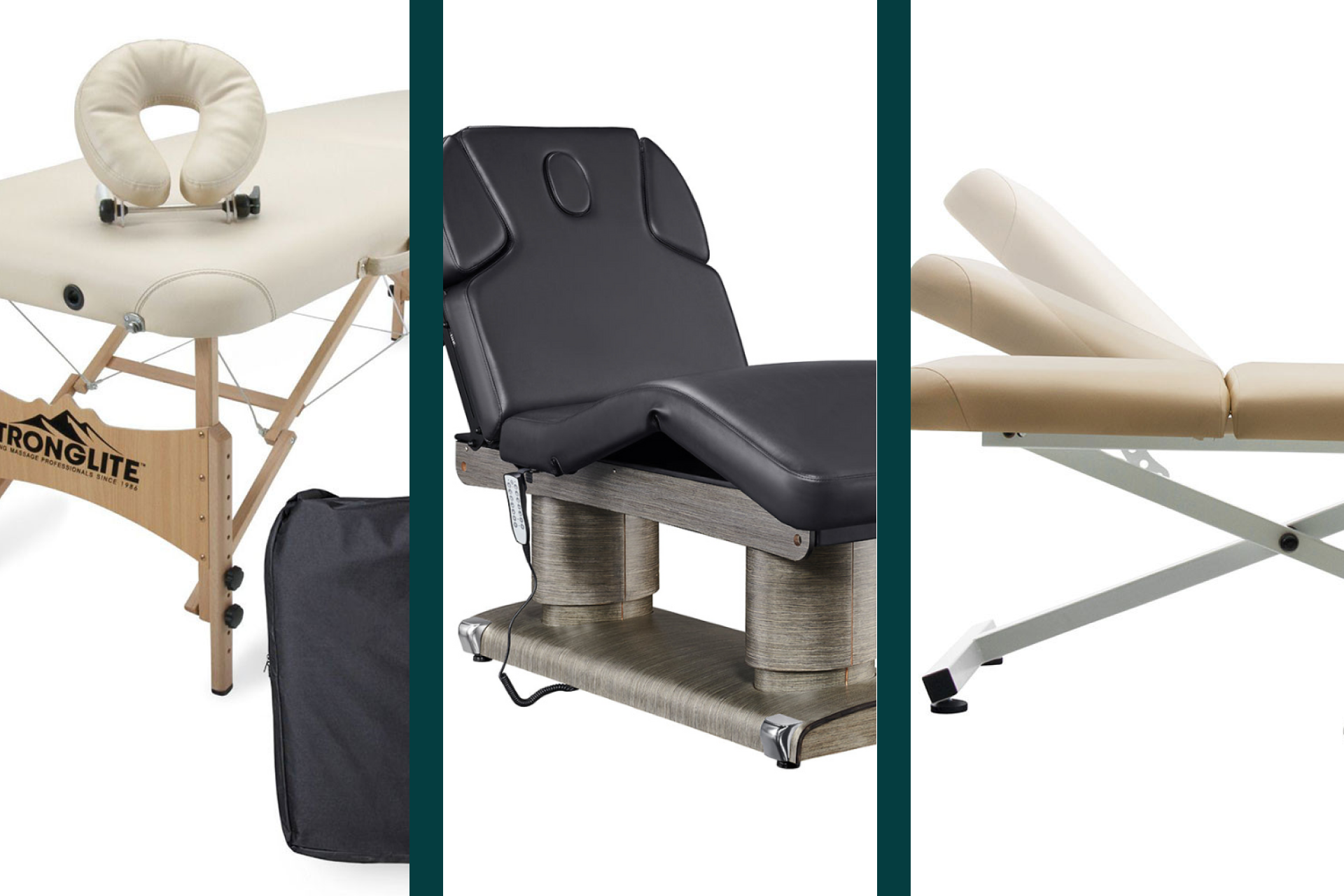
This is where operational context really drives the decision. The three main categories serve genuinely different use cases, and getting this wrong creates daily friction for staff.
Portable Tables
Portable massage tables make sense for resort spas offering in-room or poolside treatments, mobile massage operations, properties with multipurpose rooms that need to be broken down between events, and training facilities. Weight matters here. The difference between a 35 lb table and a 45 lb table is enormous when a therapist is carrying it across a resort property three times a day. The Stronglite Shasta and Classic Deluxe both come in at 35 lbs with full carry cases, which is about as light as you can get without sacrificing structural integrity.
Stationary Tables
Dedicated treatment rooms that serve a consistent menu benefit from stationary tables. They’re heavier, wider, and generally offer thicker cushioning systems because they don’t need to fold. If your rooms are single-purpose massage rooms, this is the natural choice. For medspas and properties running a mix of massage, facials, and aesthetic treatments, a fully motorized, stationary table like the DIR Luxi Medical Spa Treatment Table earns its keep. It features four motors for independent backrest, footrest, tilt, and height adjustment—all via remote control—with a solid steel frame rated to 650 lbs and high-density memory foam cushioning. It arrives fully assembled, which eliminates the setup headache that comes with some stationary models. The trade-off with any stationary table is that rearranging or deep-cleaning becomes more involved, but the stability and comfort gains are significant for rooms running back-to-back sessions all day.
Electric Lift Tables
An electric treatment table is the fastest-growing category in spa equipment procurement for good reason. A foot-pedal height adjustment lets therapists work at the ergonomically correct height for their body, reducing repetitive strain injuries that lead to workers’ comp claims and career-ending conditions. For properties that need an ADA-compliant treatment table, electric lifts are the clearest path to accessibility. The Stronglite Ergo Lift Treatment Table adjusts from 18” to 37” via foot pedal, which covers the full ADA-accessible range. It also includes a manual tilt option in 10-degree increments, making it versatile enough for facials and medi-treatments—not just massage. That kind of cross-service flexibility can justify the higher upfront cost by reducing the total number of specialized tables a facility needs.
For properties with multiple treatment rooms, a mix of electric and portable tables often makes the most operational sense. Put electric lifts in your primary massage rooms and keep portables available for overflow, couples’ suites, or outdoor service.
Durability, Maintenance, and the Long Game
A well-built treatment table should last five to ten years in a busy commercial spa. That math only works if you buy for durability up front and maintain the table properly throughout its life. Steel frames resist warping better than aluminum over time, though aluminum wins on portability. Hardwood legs—maple or beech—outperform softwoods and composites because they absorb shock from daily setup/breakdown without loosening at the joints.
Upholstery is the component most likely to fail first. Build a replacement cycle into your maintenance budget. Most commercial operations see upholstery degradation start around the two-year mark with daily use, even with proper cleaning protocols. Having a supplier relationship that can deliver replacement parts without a three-week backorder is worth more than saving a few dollars on the initial purchase.
Amenie’s treatment table collection is curated specifically for hospitality and wellness facilities, which means the products are vetted for commercial throughput rather than home or occasional use. That distinction matters when you’re running six to ten sessions per room per day.
Accessories and Linens: The Details That Complete the Setup
A table without the right accessories is an incomplete workstation. Face cradles, bolsters, arm rests, and headrest cushions all affect the client experience and the therapist’s ability to work efficiently. Most professional-grade tables ship with a face cradle and pillow, but check whether they’re included or sold separately—it changes the effective price comparison.
Linens are the other half of the equation. Massage table sheets take a beating in a professional environment: daily laundering at high temperatures, exposure to oils and lotions, and constant stretching over padding. Investing in purpose-built spa linens designed for treatment table dimensions (rather than repurposing standard bed sheets) reduces replacement frequency and looks noticeably more polished to guests.
For properties that also stock bath amenities, spa supplies, and other hospitality supplies, consolidating these purchases through a single vendor like Amenie simplifies procurement, reduces vendor sprawl, and often unlocks better pricing across categories.
Making the Right Investment
Choosing a massage table is one of the more straightforward capital decisions in spa operations—but only if you approach it with clear priorities. Match the table to your treatment menu, buy for the weight capacity you actually need (not the minimum), prioritize cushioning and upholstery quality over aesthetics, and consider electric lifts for any room that runs six or more sessions per day.
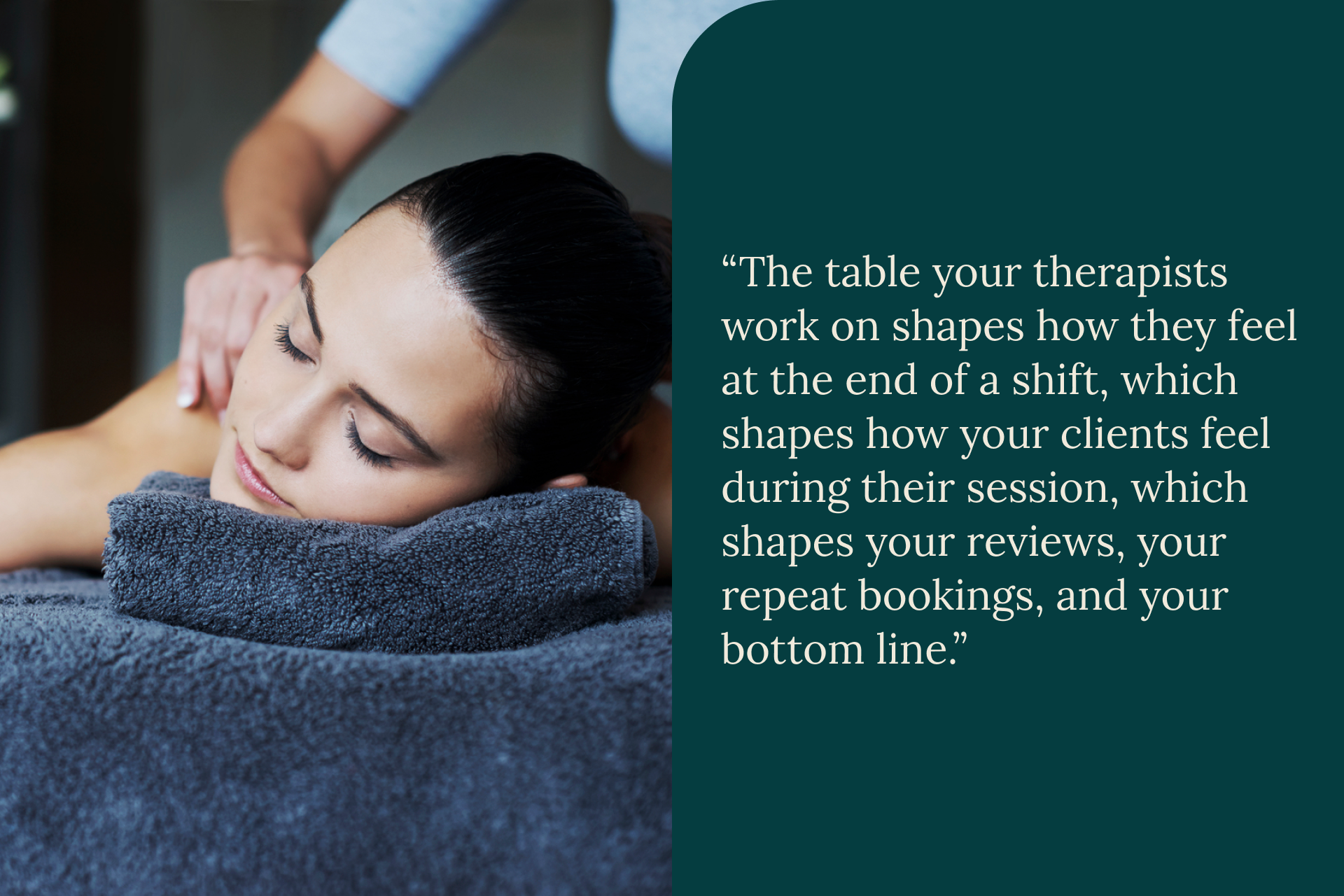
The table your therapists work on shapes how they feel at the end of a shift, which shapes how your clients feel during their session, which shapes your reviews, your repeat bookings, and your bottom line. Whether you’re outfitting a standalone day spa or sourcing a hotel spa massage table for a resort property, the chain starts with one good purchasing decision.
Explore Amenie’s curated selection of treatment tables and spa equipment built for the demands of professional hospitality environments.