




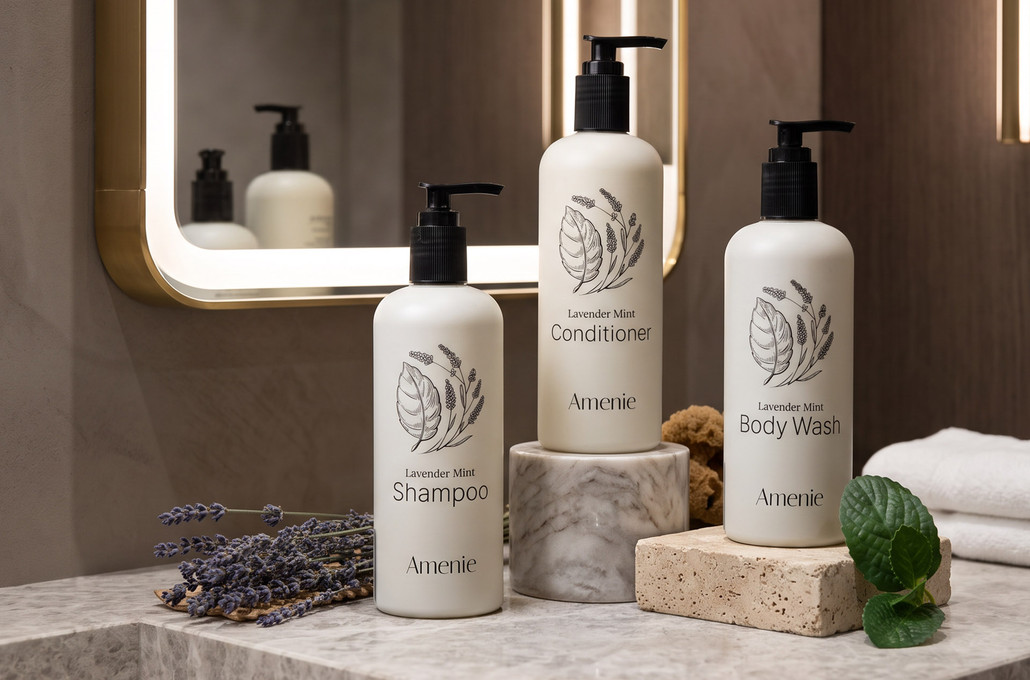
How to Choose a Hotel Amenity Program: Good, Better, Best
Posted by Amenie on Aug 26, 2026
Quick Answer: A hotel amenity program is the set of guest bath and body products a property provides. The Good, Better, Best framework sorts the options into three tiers:
Good: single-use products in recognizable brands. Best for limited-service, extended-stay, and simplicity-first properties.
Better: bulk dispensers with gallon refills. Cuts per-use cost by roughly 30 to 40%, meets mini-bottle regulations, and is where most upgrading hotels land.
Best: curated prestige brands or signature scent lines. Fits full-service, boutique lifestyle, and spa properties where the amenity is part of the brand story.
Choose the tier that matches guest expectation, housekeeping capacity, and total cost of ownership over 24 months, not the highest price on the shelf.
The moment a guest steps into the bathroom, the amenity program speaks for the property. Quiet, but immediate. The scent, the packaging, the format of what is on the counter or mounted on the wall, all of it communicates something about how much the property cares.
That signal matters whether you manage a single boutique inn or a portfolio of fifteen properties. The stakes are just different.
For a multi-property procurement team, a poorly chosen program creates inconsistency across locations and compliance risk in regulated states. For an independent hotel operator looking to upgrade, it means a missed opportunity to close the gap between what guests experience and what the property is capable of delivering. For a boutique hotel, it can mean the difference between an amenity that feels considered and one that feels like an afterthought.
This guide is built for all three situations:
- Multi-property procurement teams standardizing or upgrading programs across a portfolio
- Independent hotel operators evaluating a step up from their current program
- Boutique hotel owners and GMs who want the amenity experience to reflect the character of the property
The framework is simple: Good, Better, Best. Each tier has a clear profile, a realistic operational picture, and honest guidance on when it fits and when it does not.
The goal is the program that fits the property you actually run, not the most expensive one on the shelf.
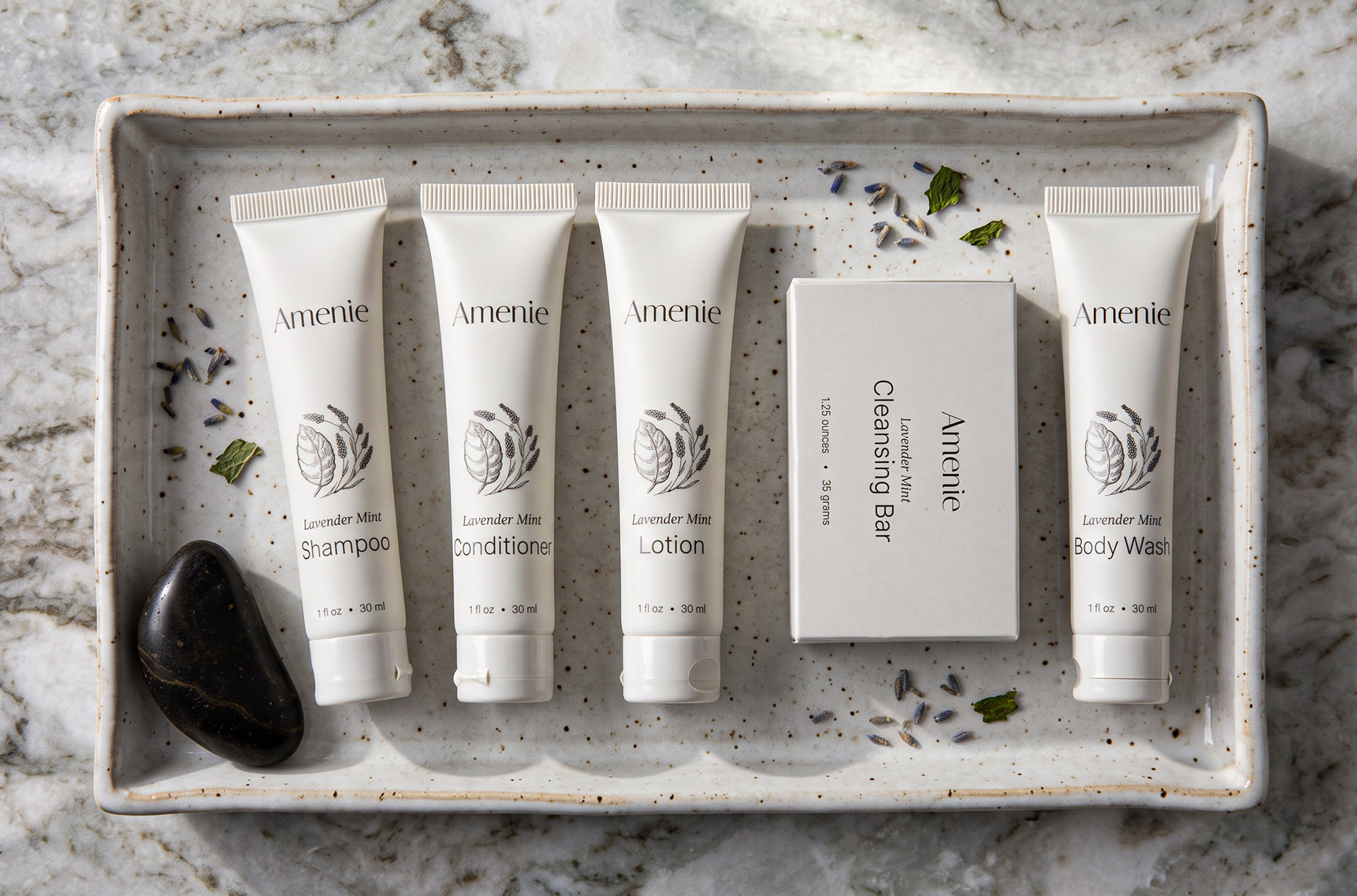
Good: Entry-Level Programs That Deliver Clean, Reliable Guest Satisfaction
Entry-level programs are built for reliability, simplicity, and clean guest satisfaction, without the complexity of hardware or a signature program to manage. For the right property, that is exactly what is needed.
Good-tier programs fit well in several situations:
- Limited-service and extended-stay hotels where the guest expectation is clean, consistent, and comfortable
- Independent hotels upgrading from generic or unbranded products who want a recognizable, quality scent without a major operational shift
- Boutique properties where simplicity is a deliberate choice, and the guest experience is carried more by design and service than by amenity theater
What it looks like in practice
A Good-tier program typically centers on single-use formats in trusted, recognizable brands. Think Aveda Rosemary Mint or Beekman 1802 Fresh Air in 1 oz amenity sizes. The scent is clean, the packaging is presentable, and the product performs. Guests recognize the brand or appreciate the quality without needing to be told why it is there.
For procurement teams, the appeal is operational: consistent SKUs, predictable case pack quantities, consolidated invoicing across ship-to locations, and reorder workflows that fit inside existing PO processes. For independent operators, the appeal is simplicity. No installation, no hardware specs, no dispenser maintenance protocols.
The operational benefits
- Standardization is fast. Single-use formats require no site-specific installation or hardware.
- Training lift is minimal. Housekeeping can be onboarded quickly across locations without property-specific protocols.
- Inventory is predictable. Par levels are straightforward to set based on occupancy, and reorder triggers are easy to manage.
What to watch: Single-use formats are under active regulatory pressure across the U.S. California was the first to act, banning small plastic toiletry bottles in hotels with 50 or more rooms as of January 2023 and extending that requirement to all properties by January 2024. New York's ban is now fully in effect across all property sizes as of January 2026. Illinois followed, with larger hotels compliant since July 2025 and all properties since January 2026. Washington State's deadline arrives in 2027 for larger hotels and 2028 for smaller ones. If your portfolio includes properties in any of these states, factor a transition plan into your total cost of ownership now. Here's why properties are switching ahead of regulation. A Good-tier program is a strong starting point; just make sure your partner can support the next step when the time comes. (Regulatory timelines current as of publication. Verify requirements in your state before making program decisions.)
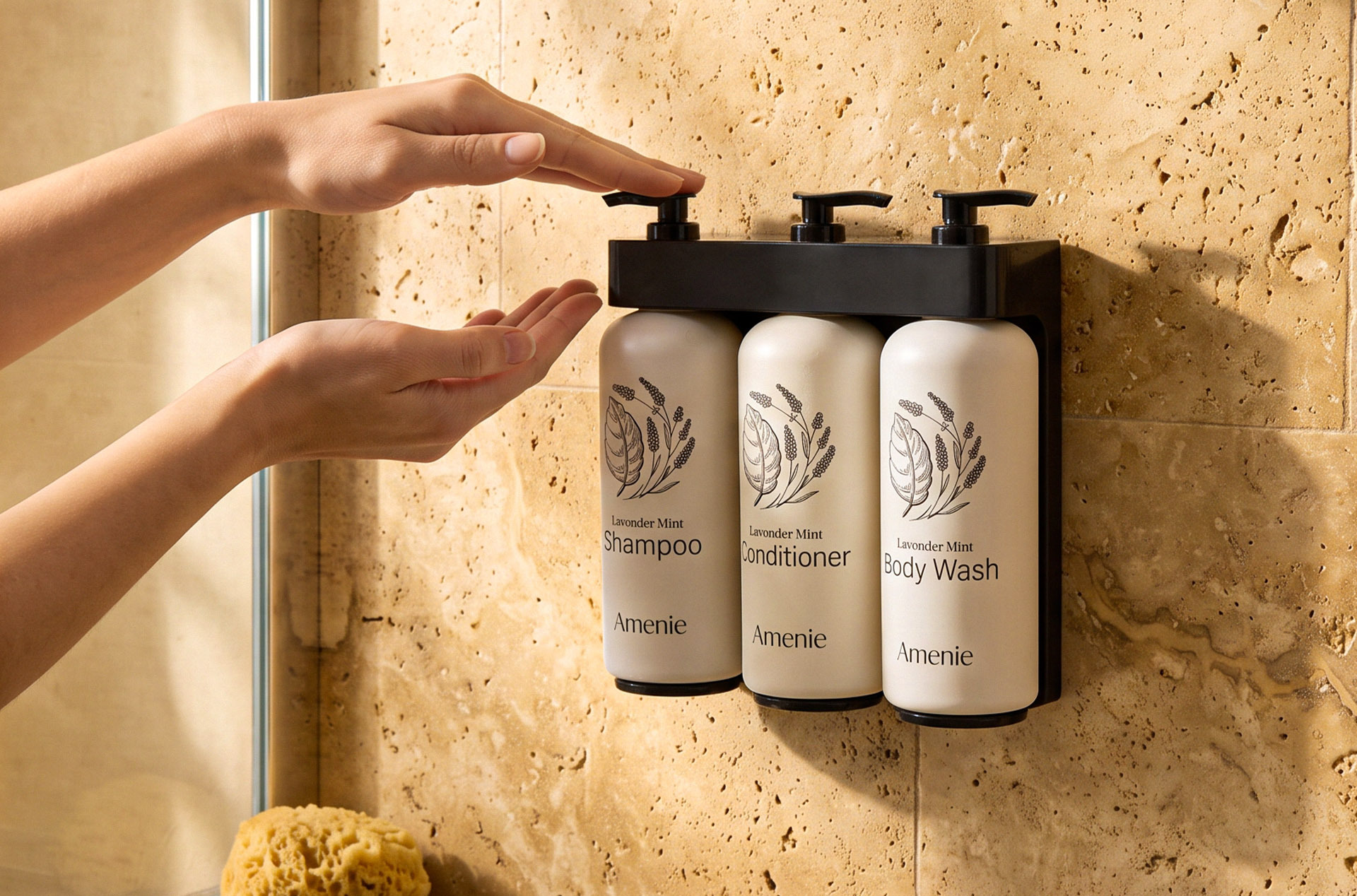
Better: Bulk Dispensing Programs for Hotels Ready to Upgrade
This is where the decision gets interesting. Moving from single-use amenities to a bulk dispensing system changes more than the product. It changes the cost structure, the sustainability story, the housekeeping workflow, and the way the bathroom reads to a guest.
For multi-property teams managing ten or more locations, this tier often represents the highest-ROI decision available in the amenity category. For independent hotels and boutique properties with operationally mature housekeeping teams, it is frequently the smartest upgrade available.
The economics
The economics are straightforward. When you move from individual 1 oz tubes to gallon refills loaded into wall-mounted dispensers, your per-use cost drops significantly. Properties that make this switch typically see amenity spend reductions in the range of 30 to 40%, with savings scaling as room count or property count grows.
The upfront investment is the dispenser hardware itself. Systems like the SOLera Oval 3-Chamber Dispenser or the AVIVA 3-Chamber Refillable Dispenser carry a one-time installation cost per room, but they pay for themselves quickly at scale. The higher the room count and occupancy, the faster that hardware pays back through lower per-use costs; exact timing depends on the program it replaces, so it is worth modeling against your own numbers.
What a Better-tier program includes
| Component | Details |
|---|---|
| Dispenser system | Wall-mounted, 1 to 3 chamber, tamper-resistant |
| Refill format | 1-gallon or 32 oz bulk fills |
| Product line | Premium scent profiles, clean ingredient standards |
| Compliance posture | Fully aligned with mini-bottle regulations |
| Housekeeping workflow | Weekly refill cadence vs. daily single-unit placement |
The operational shift to plan for
Bulk dispensing requires a different housekeeping protocol than single-use. Refill cadence, pump maintenance, and dispenser cleaning all need to be built into standard operating procedures before rollout. For boutique properties with lean housekeeping teams, this is worth piloting in a few rooms before a full conversion. For multi-property teams, a two- or three-property pilot before portfolio-wide rollout is standard practice.
There is also a compliance advantage. A bulk dispensing program is both operationally efficient and durable against regulation. California, New York, and Illinois already have active bans, and Washington State's deadline arrives in 2027. Standardizing on dispensers now means your portfolio is not scrambling to retrofit when the next state legislature acts.
Key takeaway: The Better tier is where most hotels land when they are ready to upgrade. The cost savings are meaningful, the sustainability story is genuine, and the guest experience improves without requiring a luxury price point.

Best: Branded and Signature Collections for a Standout Guest Experience
The Best tier earns its place at properties where the amenity program is part of the brand story, where guests notice the scent, mention the bathroom in their review, and associate the feeling of the stay with something they cannot quite name but want to return to. Many properties do not need it, and that is fine.
For full-service hotels, boutique lifestyle properties, and spa-integrated experiences, a well-chosen branded or signature collection does something a generic catalog program cannot: it makes the guest feel like they are somewhere specific, not just somewhere nice. For spa and wellness properties in particular, the ingredient story matters as much as the scent. Guests in a treatment environment notice formulation quality, fragrance carry, and whether the products on the shelf feel consistent with the experience they just paid for. A Best-tier program gives spa directors the ability to specify products that hold up to that scrutiny, and often creates a natural retail attachment point when guests ask what they used.
What sets this tier apart
- Curated prestige brand partnerships. Building a cohesive in-room presentation around a recognized hospitality brand, including dispenser finish, packaging, and scent narrative, so the bathroom feels considered from every angle.
- Signature scent lines. Amenie's own Luxe Collection scents, such as Sicilian Tangerine and Lavender Mint, give the bathroom a distinctive identity guests notice and ask about by name, and are available in bulk and dispenser formats.
Whether you build around a curated prestige brand or one of Amenie's own signature scent lines, the goal is the same: a bathroom that feels unmistakably yours.
Is this tier right for your property?
Before committing, these questions are worth answering honestly:
- Does the property's average daily rate and guest profile justify the per-room amenity cost?
- Is the amenity program part of how you describe the property to prospective guests, or is it background?
- Does your room count and volume support a dedicated signature program across the property?
- Do you have the internal bandwidth to steward a signature program over time, including seasonal updates and reorder management?
A note for boutique operators: A signature experience does not require a large or complex program. A thoughtfully curated prestige brand, or one of Amenie's own signature scent lines, presented in a well-designed dispenser with a coherent scent story, delivers that standout feel at a boutique scale. That is often the right entry point into this tier.
For multi-property teams, the practical approach is to reserve Best-tier for flagship or lifestyle properties while running a Better-tier bulk dispensing program across the broader portfolio. That is smart segmentation, not a compromise.
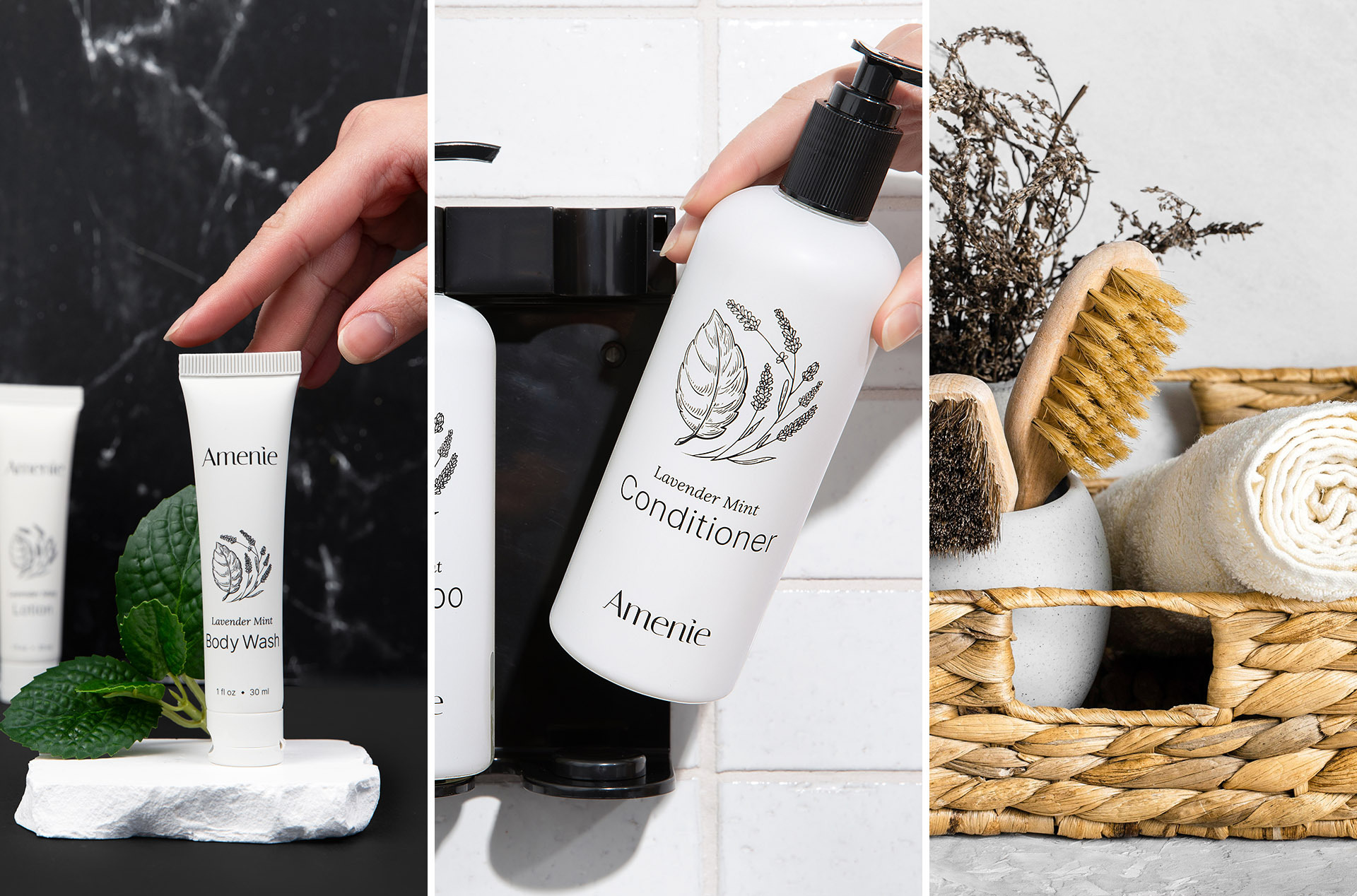
How to Choose the Right Tier for Your Property Type
Most properties do not need a custom analysis to find their starting point. The table below maps property type to recommended tier based on guest expectation, brand positioning, and operational capacity.
| Property Type | Recommended Tier | Primary Driver |
|---|---|---|
| Limited-service / extended-stay | Good | Operational simplicity, cost control |
| Independent hotel upgrading from generic products | Good or Better | Quality signal, brand credibility |
| Select-service with strong guest review scores | Better | Cost savings + compliance readiness |
| Full-service urban hotel | Better or Best | Guest experience, brand positioning |
| Boutique lifestyle property | Better or Best | Design coherence, signature feel |
| Spa-integrated or wellness property | Best | Ingredient story, guest memory |
| Flagship / signature property | Best | ADR alignment, brand differentiation |
Three diagnostic questions before you decide
If you are still unsure which tier fits, these three questions cut through the noise:
- What does your guest actually expect? A business traveler at a select-service property has different expectations than a leisure guest at a boutique resort. Match the program to the expectation, not the aspiration.
- What can your housekeeping team execute consistently? The best program in the world fails if it creates operational friction. A dispenser system that is not refilled on schedule is worse than a single-use program that runs smoothly.
- What is your total cost of ownership over 24 months? Unit price is one variable. Factor in waste, labor, reorder frequency, compliance risk, and the cost of switching programs mid-cycle.
For hotels upgrading an existing program, there is a fourth question worth adding: what are guests saying now? Review signals around cleanliness, bathroom quality, and product experience are often the clearest indicator of where the current program is falling short and what the upgrade needs to address.
Why the Right Partner Matters More When You Expand or Upgrade
Choosing a tier is the strategic decision. Executing it consistently, whether across one property or twenty, is the operational one. The two require different things from a vendor, and most catalog suppliers are built for the former, not the latter.
A partner that can support a genuine upgrade or a multi-property standardization needs to offer more than a product list:
- Concierge-level account support that understands your property mix and can advise on tier selection, not just fulfill orders
- Sampling support before you commit portfolio-wide, so your housekeeping team and GMs can sign off on the product before it is in every room
- Consistent supply across all ship-to locations, with the ability to manage multi-property POs and staggered delivery schedules
- Compliance guidance on mini-bottle regulations by state, so your program is built to last as legislation expands
- Flexibility across tiers, so you can run Good at some properties and Better at others without managing two separate supply chains
Our bulk shower dispensers and single-use amenity programs are designed to work together within the same vendor relationship, and our purchasing program for hotels is built to simplify sourcing whether you run one property or twenty. That means your portfolio can evolve without your supply chain having to start over.
If you are evaluating or upgrading your amenity program, we are happy to walk through your property mix and build a tiered recommendation. That is concierge service in practice.
Explore our amenity programs or reach out directly to talk through your portfolio.
Frequently Asked Questions
What is the difference between single-use and bulk dispensing hotel amenity programs?
Single-use programs provide individually packaged products per room turn, with no hardware required. Bulk dispensing programs use wall-mounted refillable dispensers loaded from gallon or 32 oz refills. Bulk systems typically reduce per-use cost by 30 to 40% and are fully aligned with mini-bottle regulations in California, New York, Illinois, and other states.
How much does a hotel amenity program cost per room?
Per-room cost varies widely with tier, product line, and order volume, so treat any single figure with caution. The more useful measure is total cost of ownership over 24 months, factoring in unit price, waste, housekeeping labor, reorder frequency, and compliance risk. Moving from single-use to bulk dispensing can lower amenity costs by roughly 40% annually, with hardware paying back faster at higher room counts and occupancy. For pricing tuned to your property mix, request a quote.
What amenity tier is right for a boutique hotel?
Most boutique hotels land in the Better or Best tier. Better-tier bulk dispensing works well for operationally mature boutique properties that want a cleaner bathroom presentation and compliance readiness. Best-tier curated brand and signature scent programs fit boutique and lifestyle properties where the amenity experience is part of the property's identity and guest story.