




10 Airbnb Cleaning Mistakes That Cost You 5-Star Reviews
Posted by Amenie on Jul 27, 2026
Cleanliness is one of the most common reasons Airbnb guests give hosts fewer than five stars — a point Airbnb itself makes in its hosting resource center. The frustrating part is that the mistakes that drag down ratings are rarely catastrophic. They're small things that compound across turnovers: a hair missed on a pillow, a bottle of body wash that runs dry on day three, a dispenser that smells faintly of last month's bleach.
The fix isn't about cleaning harder. It's about cleaning like a hospitality operator rather than a homeowner, which means tighter SOPs, hospitality-grade products, and the kind of inventory discipline that keeps every turnover consistent regardless of who's holding the mop.
Here are the ten mistakes that show up most often in negative cleanliness reviews, and the practical fix for each.
1. Cleaning Like It's Your Own Home
Residential cleaning is forgiving. You know where your own dust lives. You tolerate your own smudges. You have all week to circle back. Hospitality cleaning isn't any of those things — a new guest starts judging the property the second they open the door, and they have nothing to compare it against except other rentals and hotels.
The mindset shift: every clean is a fresh, blind audit. Whether the cleaner is the host or someone hired, the same checklist runs every time, without skipping steps because “the last guest didn't use the kitchen.” That assumption is wrong roughly half the time, and it's the one that creates the surprise complaint about toaster crumbs.
2. Skipping High-Touch Surfaces
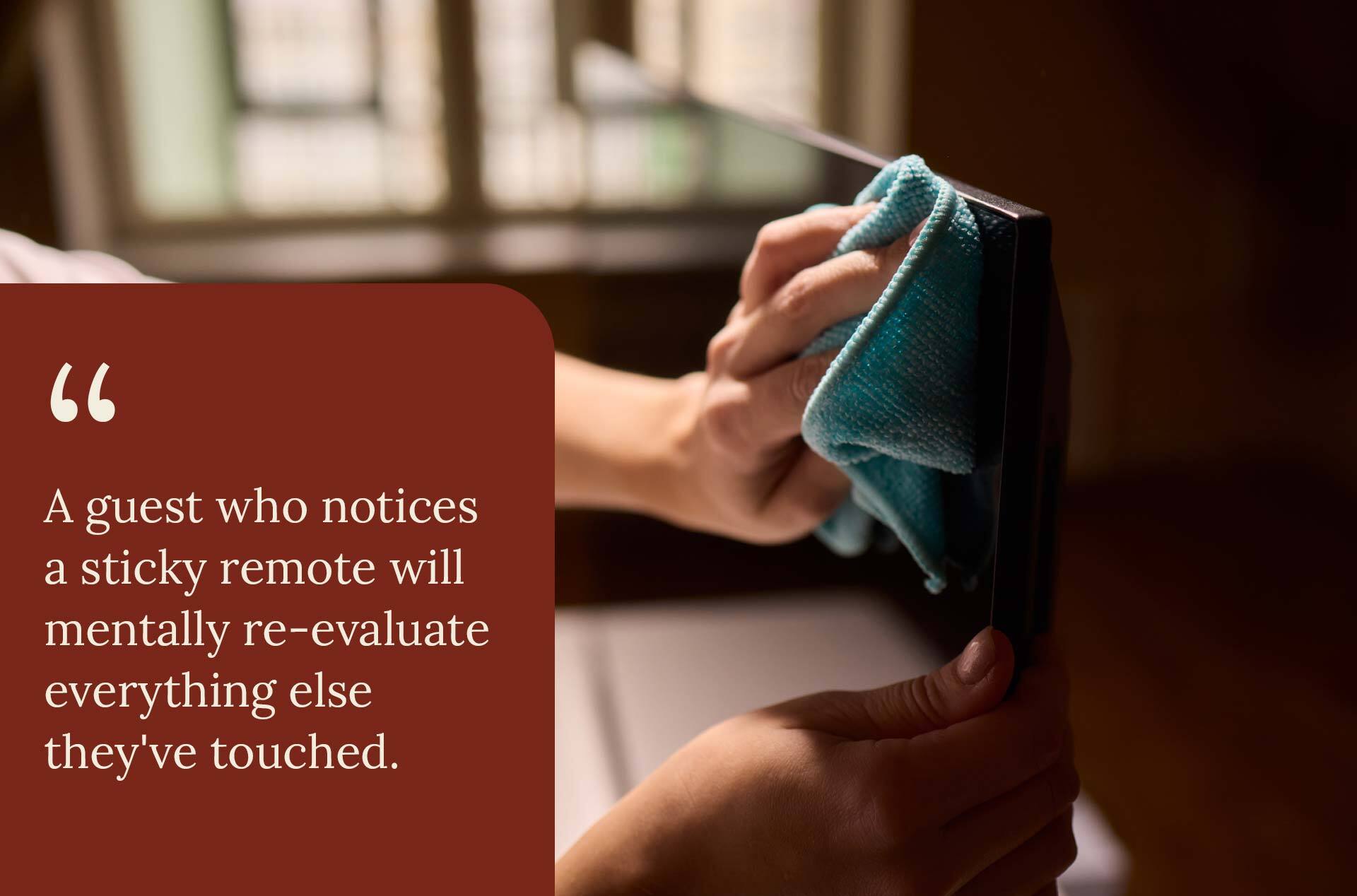
Light switches, door handles, remote controls, faucet handles, appliance knobs, the inside of the front door handle, the back of the toilet flush lever — these are the surfaces guests touch most, and the ones cleaners skip most often. They rarely look visibly dirty, which is exactly why they get missed.
But a guest who notices a sticky remote will mentally re-evaluate everything else they've touched. Wipe these down with a disinfectant spray and microfiber cloth on every turnover, not just deep cleans. Adds maybe three minutes to the routine.
3. Missing a Small But Negative Detail
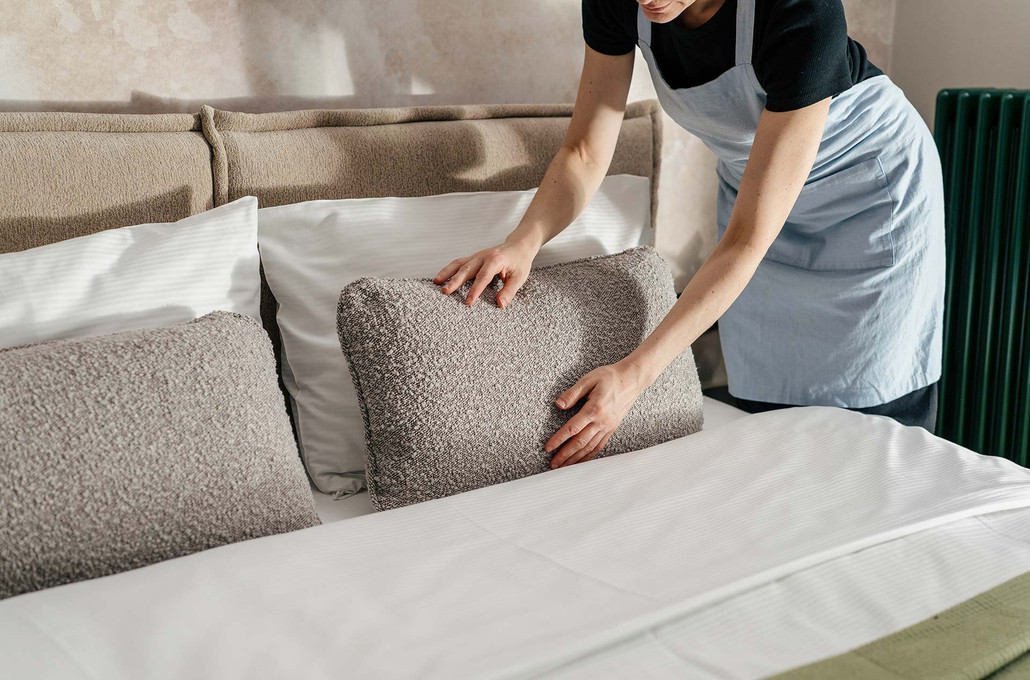
Nothing triggers a negative guest response more quickly than finding a stray hair, whether it’s on a pillow or a shower wall. This is the cleanliness issue most often cited in negative reviews, as it suggests the space has not been fully cleared of the previous guest's presence. Even an otherwise immaculate bathroom instantly loses credibility with a single hair visible on white tile.
The fix is a two-pass routine. Lint-roll all bedding and pillows after the bed is made, then do a final visual sweep of the bathroom at both eye level and floor level. Pay specific attention to shower walls, behind the toilet base, and the underside of the toilet seat hinges. The detail pass adds 10 to 15 minutes per turn and prevents the single review that drags an annual average down a quarter star.
4. Using Products That Smell Institutional
Heavy bleach, pine cleaner, and strong artificial scents create the wrong impression; they smell like covering something up, not like clean. Guests associate that smell with hospital corridors, not vacation rentals. Worse, those scents linger in linens and towels and carry into the next stay.
Switch to neutral or lightly fragranced cleaning supplies and ventilate the property thoroughly between cleanings. The “smell of clean” guests actually want is closer to no smell at all, with maybe a hint of natural fragrance from the toiletries themselves.
5. Letting Mineral Buildup and Grout Staining Slide
Hard water deposits on glass shower doors, faucet aerators, and showerheads accumulate slowly enough that hosts stop noticing, but a guest sees it on day one. Same with darkening grout, soap-scummed shower walls, and the chalky buildup around the base of bathroom faucets.
These don't get fixed during a turnover clean. They need a scheduled deep-clean interval: roughly every four to six weeks at high occupancy, every six to eight weeks at moderate occupancy. Without that interval, the property looks tired even when it's technically clean.
6. Running Out of Basic Amenities Mid-Stay
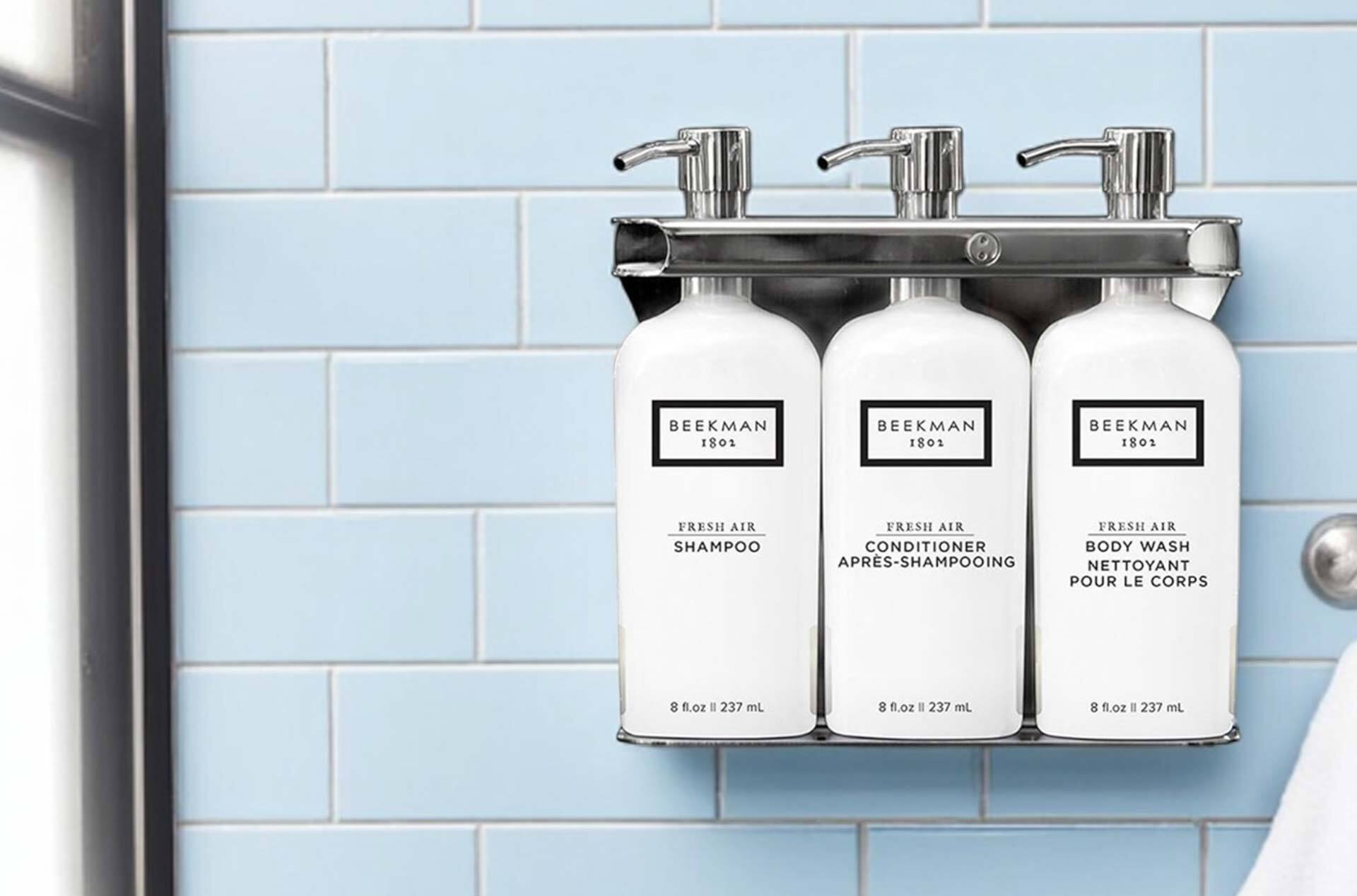
A guest who has to use a sample-size shampoo on day one because the bottle was empty on day two leaves a worse review than a guest with no shampoo at all. Mid-stay shortages on shampoo, conditioner, body wash, and hand soap are one of the most common operational failures in STR cleaning routines.
The structural fix is to move off single-use amenities and onto refillable wall-mounted dispensers with bulk gallon refills. A standard wall-mounted dispenser holds enough product to last several stays without intervention, and the per-ounce cost runs significantly lower than mini bottles. (For a closer look at how refillable systems work specifically for STR operators, see the smart host's guide to eco-friendly Airbnb refills.)
For longer stays, anything over four nights, build a mid-stay restock into the schedule. It costs the host very little and prevents the four-star review entirely.
7. Operating Without a Written Turnover SOP
“My cleaner knows what to do” is the most expensive sentence in vacation rental management. Cleaners have off days. Cleaners get replaced. Cleaners are humans whose attention drifts on the third turnover of the day. Without a written, room-by-room SOP that runs every time, the cleanliness score becomes a function of who shows up that morning.
The SOP doesn't have to be elaborate. It has to be specific: which surfaces get wiped, which products to use, which areas get inspected, how the bed is made, and how the bath is set up. Print it. Laminate it. Keep it in the cleaning supply caddy. Update it any time a guest mentions something that should have been caught.
8. Skipping the “First 30 Seconds” Audit
Guests judge cleanliness in the first 30 seconds, long before they inspect the details. A musty smell in the entryway, dim lighting, slightly misaligned throw pillows, or a coffee table at the wrong angle can make a clean property feel uncared-for. The reverse is also true: a brightly lit, well-arranged room with a fresh, neutral smell can carry a property even when the deep-clean interval is overdue.
After every turnover, the cleaner (or the host) should walk in through the front door, stand still for 30 seconds, and ask: “What would I notice first if I were arriving for the first time?” Most of the staging adjustments take under a minute and have a disproportionate effect on review scores.
9. Skipping the Deep-Clean Interval
Turnover cleaning keeps a property presentable. Deep cleaning keeps it actually clean. Mattress protectors, headboards, baseboards, kitchen vent hoods, refrigerator coils, behind the toilet, under the bed, the underside of dining chairs, and the inside of the dishwasher all need attention on a longer cycle than every-turnover cleans allow for.
For most STR properties, every four to six weeks is the right interval at high occupancy, every two months at moderate occupancy. Build it into the schedule between guest stays and treat it as non-negotiable. The properties that skip this interval are usually the ones where guests start mentioning a “musty smell” or “dust on the ceiling fan” in reviews about a year in.
10. No Inventory Discipline on Cleaning Supplies
Supply ownership varies. Some hosts stock everything, and the cleaner arrives empty-handed. Others hire cleaning companies that bring their own chemicals and tools as part of the fee. Most arrangements land in the middle — the host keeps consumables on hand (paper goods, soaps, disinfecting wipes) while the cleaner brings the workhorse products. Either way, the failure point is the same: a cleaner who runs out of disinfectant mid-clean takes a shortcut. A cleaner who runs out of microfiber cloths reaches for a paper towel. A cleaner who runs out of toilet paper hopes the next guest won't notice. Each shortcut shows up as a star.
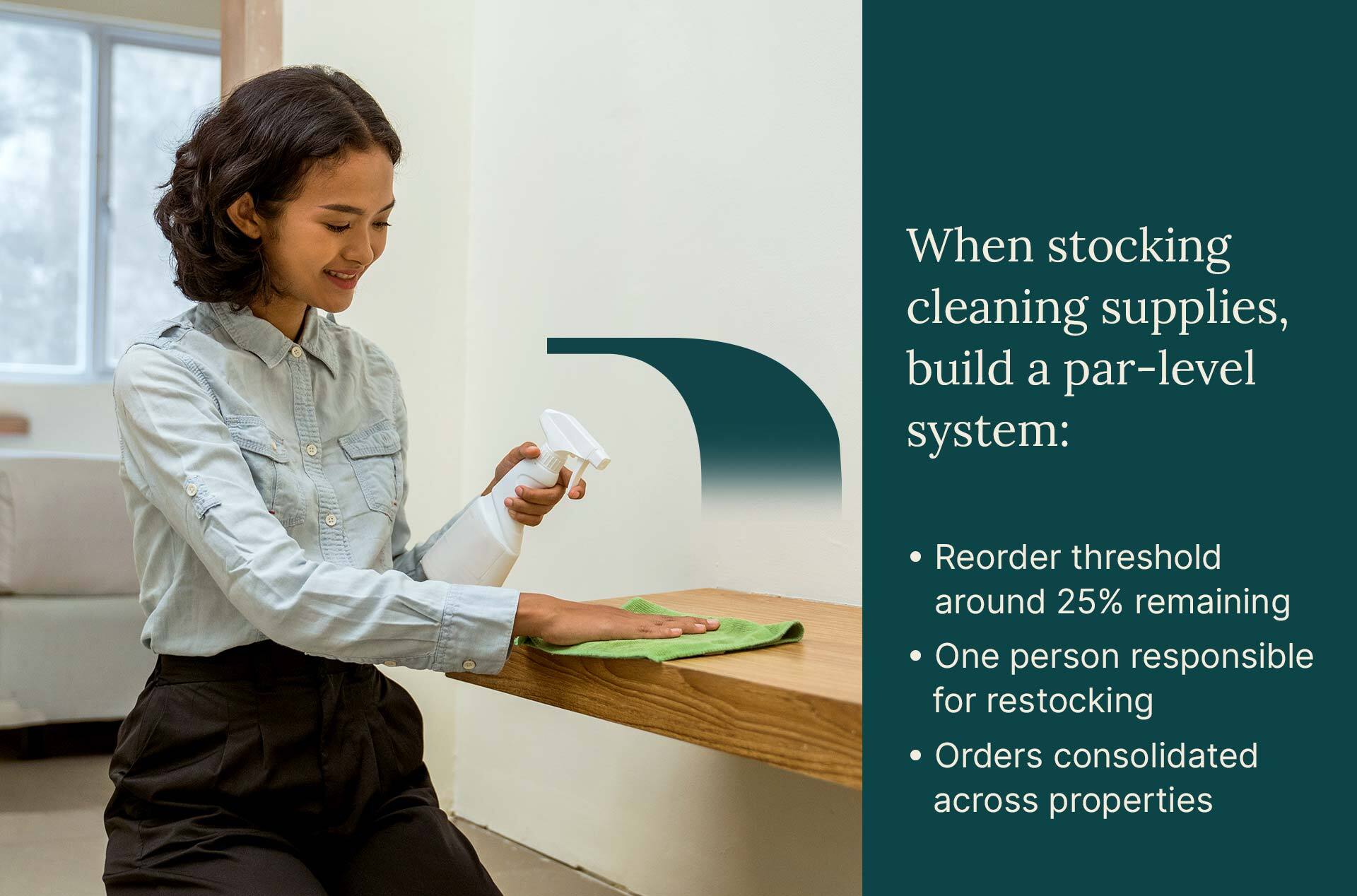
If you're stocking supplies, build a par-level system like you would for amenities: reorder threshold around 25% remaining, one person responsible for restock, orders consolidated across properties when possible. For multi-property operators, this is where vendor consolidation pays off — one supplier with consistent SKUs and multi-ship checkout means a single PO can restock five rental units without the back-and-forth that creates the supply gaps in the first place. A stocked cleaning caddie per property keeps the scrambling down.
If your cleaner brings their own, the discipline shifts to the contract. Confirm what's in scope, what products get used (guests with sensitivities will ask), and what happens when something runs out mid-turn. A small on-property backup kit — toilet paper, paper towels, a spare all-purpose cleaner — keeps a missed delivery on their end from becoming a missed standard on yours.
How to Build a Cleaning Standard That Actually Holds Up in Your Airbnb
Most of these mistakes come from one root cause: cleaning is treated as a task to complete rather than a standard to maintain. A few practices that distinguish properties with consistent 4.9+ cleanliness scores:
- A written, room-by-room SOP that lives in the cleaning caddy
- Hospitality-grade refillable amenities so mid-stay shortages can't happen
- A documented deep-clean interval, with someone responsible for it
- Photo documentation of the post-clean state for both QC and dispute protection
- Clear ownership of cleaning supplies — either a par-level system you manage, or a scoped agreement with the cleaning company
- Inventory pars on cleaning supplies, with a designated reorder owner
For a starting checklist of the supplies that should be on hand before any of this works, see the top Airbnb cleaning supplies guide, and the 10 essentials for 5-star reviews walks through the broader essentials list.
Frequently Asked Questions
How often should you deep-clean an Airbnb?
For high-occupancy properties (3+ stays per week), every four to six weeks. For moderate occupancy, every six to eight weeks. The deep clean covers what turnover cleaning can't reach: mattress protectors, baseboards, vent hoods, behind appliances, and underside surfaces. Properties that skip this interval start collecting mentions of musty smells, dust on fans, and “tired” finishes in reviews around the one-year mark.
What cleaning products do Airbnbs need?
Hospitality-grade essentials: a neutral-scent multipurpose cleaner, a bathroom disinfectant, a glass cleaner, a stainless steel polish, a wood-safe floor cleaner, microfiber cloths in volume, and a stocked supply of paper goods. Avoid heavy bleach or strong pine scents — they create an institutional impression that guests notice immediately.
How long should it take to clean an Airbnb between guests?
For a one-bedroom, one-bathroom unit: 90 minutes to 2 hours, including linens, kitchen, and bathroom reset. For a two-bedroom: 2 to 3 hours. Add 15 to 20 minutes for the detail passes that catch the high-touch surfaces and stray hairs. Properties that consistently come in under those numbers are usually skipping something.
Should Airbnbs provide refillable amenities or single-use bottles?
Refillable, in almost all cases. Single-use bottles run out mid-stay, get pocketed, and increasingly run into local plastic regulations — California's hotel toiletry ban now explicitly includes vacation rentals, with several other states moving in the same direction. Wall-mounted dispensers with bulk refills solve the mid-stay shortage problem and standardize the look across rooms.
What is the most common Airbnb cleanliness complaint?
Stray hairs in the bathroom or on bedding, followed by lingering odors, visible dust, kitchen crumbs, and bathroom mineral buildup. Each of these is preventable with a two-pass turnover routine and a documented deep-clean interval.